

























The anthropocene at the decisive turning point: the numbers of the biospheric emergency
Planet Earth is firmly settled within a new geological epoch redefined by scientists as the Anthropocene, a historical period in which the impact of human activities on atmospheric chemistry, ocean biology, and the very structure of soils has bypassed the strength of natural biogeochemical cycles. Data released by leading international research institutes, including the Intergovernmental Panel on Climate Change (IPCC) and the European Environment Agency, map out a state of exceptional gravity and urgency throughout this year, 2026. The concentration of carbon dioxide in the atmosphere has stably surpassed historical levels, pushing the global average temperature toward critical thresholds beyond pre-industrial levels. This thermal alteration does not merely translate into warmer summers; it destabilizes the entire planetary climate system, manifesting as an unprecedented frequency and intensity of extreme weather events: prolonged droughts, marine heatwaves, accelerated melting of continental glaciers, and catastrophic floods hitting urban centers and rural areas alike.
The climate crisis is not an isolated emergency but is inextricably woven with the sixth mass extinction in planetary history and the progressive degradation of global lands. Biodiversity loss is proceeding at rates a hundred times faster than the natural speed of evolution, undermining the very foundation of the critical ecosystem services upon which human survival depends: the pollination of food crops by insects, the biological purification of drinking water by wetlands, and the natural carbon storage carried out by primary forests and healthy soils. Intensive agriculture, systematic deforestation, and unchecked urban sprawl have degraded over 40% of the world’s land surface, transforming vast fertile territories into arid areas exposed to desertification and hydrogeological instability.
Faced with this complex biospheric challenge, linear economic models based on the old extractive paradigm of “take, make, use, and dispose” have proven structurally incompatible with Earth’s biophysical limits. The survival of our civilization requires a systemic ecological transition, a radical shift in direction involving global geopolitics, industrial systems, financial markets, and the daily habits of individual citizens. It is no longer enough to implement mitigation strategies to reduce future emissions; initiating a massive movement of active ecological regeneration is now a priority to restore the functionality of compromised ecosystems and stabilize the planet’s vital parameters.
Macro-strategies for the transition: decarbonization, circular economy, and nature-based solutions
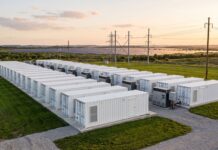
The core pillar of global regeneration lies in the rapid and complete decarbonization of the global energy and industrial system. The abandonment of fossil fuels (coal, oil, and natural gas) must be accelerated through the massive installation of renewable generation facilities, such as high-efficiency next-generation solar power and deep offshore wind. However, the energy transition alone is insufficient unless it is structurally paired with a profound reconfiguration of material flows via the circular economy. Industries must be redesigned to eliminate the very concept of waste at the source, implementing ecodesign frameworks where every product is conceived to be durable, repairable, disassemblable, and completely recyclable at the end of its life cycle.
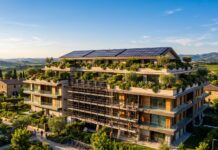
Alongside engineering and technological solutions, the international scientific community now recognizes the irreplaceable role of Nature-Based Solutions (NBS) to combat climate change and environmental degradation. These practices entail the large-scale restoration of native forests, urban afforestation to mitigate heat islands in Smart Cities, the regeneration of posidonia oceanica seagrass meadows in the Mediterranean Sea (extraordinary blue carbon sinks), and the adoption of regenerative agriculture and agroecology. Healthy soils, enriched with organic matter and protected by no-till farming practices, possess the capacity to sequester billions of tons of atmospheric CO2, storing it stably in the ground while simultaneously improving water retention and agricultural fertility without synthetic chemical fertilizers.
On the regulatory and geopolitical front, the adoption of strict and binding ESG (Environmental, Social, and Governance) criteria within financial markets is steering global capital flows toward genuinely sustainable investments, penalizing companies that practice greenwashing. International cooperation between governments, the open-source sharing of green technologies, and financial support for developing countries to enable clean technological leaping constitute the essential geopolitical prerequisites to ensure equity and the success of the ecological transition on a planetary scale.

Technological optimization and the role of separate urban waste stream management
While major industries tackle the challenge of structural decarbonization, urban areas and city systems represent ideal laboratories to apply the principles of the circular economy on a daily scale. The success of a city’s ecological transition is measured by its capacity to implement accurate and efficient separate waste management, maximizing the purity of materials collected at the source and eliminating sorting errors that downgrade resources into unusable waste. Within modern Smart Cities, the adoption of cloud-native software platforms and geolocalized applications is bridging the information gap between municipal regulations and citizens. Technological solutions like the SmartRicicla application serve as genuine information ecosystems that eliminate uncertainty in front of waste bins. Supported by constantly updated databases and multi-tenant architectures accessible at zero activation costs for public administrations, these technologies remove barriers to urban efficiency, guiding users toward flawless household stream management.
Logistical optimization implemented via smart bins equipped with IoT sensors and predictive algorithms allows municipal companies to track filling levels in real time, dynamically reshaping collection routes. This approach drastically cuts down the kilometers traveled by waste management vehicles, reducing noise pollution and fine particulate emissions in historic centers. The merger of accessible digital technologies and mindful civic commitment demonstrates that environmental protection is not built solely through international macro-treaties, but is constructed and consolidated day after day through the efficient and transparent management of collective urban behaviors.
A solemn call to action: collective responsibility for the planet
The complex architecture of industrial reforms, technological innovation, and international geopolitical negotiations finds its highest expression and ideal synthesis on this crucial date: on June 5th, we officially celebrate World Environment Day. Established by the United Nations in 1972 to commemorate the Stockholm Conference on the Human Environment, this event constitutes the largest and most authoritative moment of ecological mobilization and awareness on the planet. World Environment Day must not be understood as a passive ceremonial celebration or a showcase for formal declarations of intent, but as a solemn, urgent, and universal call for immediate action.
The theme of safeguarding the Earth calls us to a profound assumption of collective and individual responsibility. Every choice made daily—from the way we apply domestic waste sorting guidelines to the adoption of validated digital tools like the SmartRicicla app in the “Dove lo butto” (Where do I throw it) section, to mindful consumption, green beauty, and soft mobility choices—constitutes a direct economic and civic vote on the future of the biosphere. Public administrations, industrial sectors, and individual citizens are called upon to act in perfect synergy within one great alliance for the planet. The Earth is not an infinite resource to be consumed, but an interconnected living system of extraordinary fragility of which we are an integral part. Defending the environment means defending public health, social stability, and the right to life of future generations. The challenge of global regeneration is the defining challenge of our century: an ethical, scientific, and social commitment that brooks no delay or compromise, to ensure that our shared home remains a welcoming, clean, and genuinely prosperous ecosystem for centuries to come.