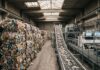

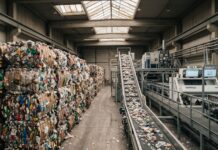




















Italy sent 3.3 million tons of non-hazardous special waste across its borders in 2024. More than two-thirds of this material was not destined for landfills, but for material recovery. Behind these figures lies a structural anomaly in the national industrial system. The country collects, sorts, and prepares discarded materials, only to ship them abroad where foreign plants complete the recycling process and extract the economic value.
This dynamic emerges from the 2026 edition of the ISPRA Report on Special Waste. The data outlines a scenario where Italian companies handle the initial, often less lucrative phases of waste management, effectively subsidizing the raw material supply chains of other nations. PolieCo, the national consortium for the recycling of polyethylene goods, analyzed the numbers and identified a severe drain on domestic industrial potential.
Looking closely at the ISPRA statistics, the mechanics of this outflow become apparent. Out of the 3.3 million tons exported, approximately 2.5 million tons originate directly from treatment plants. Classified largely under the European Waste Catalogue sub-chapter 1912, these are materials that have already undergone mechanical processing. They have been separated, shredded, and baled. They are primed for final transformation.
According to the report, over 2.2 million tons—equivalent to 66.3% of the total exported non-hazardous waste—cross the borders specifically for material recovery. Claudia Salvestrini, director general of PolieCo, argues that this high percentage exposes a critical vulnerability. The national system successfully manages the collection and preliminary treatment but hits a wall when it comes to final valorization.

“We continue to ship abroad materials that could feed our industrial supply chains, creating employment, investments, and greater autonomy in the procurement of raw materials,” Salvestrini states. The consortium views this not as a physiological trade flow, but as a direct consequence of internal bottlenecks.
The missing link in Italy’s circular economy is infrastructure. PolieCo points to a persistent deficit in advanced recycling facilities, compounded by technological gaps and a notoriously slow permitting process. Companies capable of transforming pre-treated waste into secondary raw materials face bureaucratic hurdles that stall plant development.
“Italy risks becoming a large logistical hub for waste instead of an industrial recycling hub,” Salvestrini notes. The current framework relegates the country to a preparatory role. The actual industrial value—the conversion of waste back into market-ready materials—materializes elsewhere. This setup contradicts the core objective of a circular economy, which relies on retaining resources within the domestic production cycle to reduce dependence on virgin raw materials.
The European proximity principle dictates that waste should be treated as close to its source as possible. Translating this principle into industrial policy requires targeted interventions. PolieCo advocates for an immediate acceleration of authorization procedures, the establishment of clear and uniform rules across regions, and robust investments in final recycling infrastructure.
Without these structural upgrades, the supply chain remains truncated. The industry prepares resources for competitors. The resolution of this imbalance depends entirely on unlocking the permitting processes for new plants, shifting the focus from simply managing waste to aggressively retaining its industrial value within national borders.