



















A single liter of used vegetable oil poured carelessly down the kitchen sink has the chemical capacity to contaminate up to one million liters of groundwater. This volume roughly equals the amount of water an average person consumes over a fourteen-year period. Despite decades of environmental awareness campaigns, the habit of washing leftover frying fats or the preserving liquids from canned foods down the drain remains deeply entrenched in domestic routines across the globe. The immediate consequence of this action extends far beyond a clogged domestic pipe, triggering a cascading failure that compromises municipal infrastructure, burdens public finances, and inflicts severe damage on fragile aquatic ecosystems.
The journey of discarded cooking oil begins with a deceptively harmless act at the kitchen sink. Warm liquid fats flow easily through domestic plumbing, creating a false sense of safe disposal. However, as these lipids travel deeper into the subterranean network of urban sewers, they encounter rapidly dropping temperatures. The thermal shift causes the triglycerides to congeal and solidify, coating the inner walls of the concrete and PVC pipelines. This initial layer of grease acts as an adhesive trap for other improperly flushed items, particularly synthetic wet wipes and sanitary products, initiating a compounding structural problem for waste management authorities.
Deep underground, a costly chemical reaction takes place. The discarded lipids mix with calcium and magnesium naturally present in the sewage water, triggering a crude and uncontrolled saponification process. These hardened masses calcify into massive structural blockages known to municipal engineers as fatbergs. These geological-like formations of urban waste can grow to staggering proportions, sometimes stretching for hundreds of meters and weighing dozens of tons. Removing them requires specialized heavy machinery, high-pressure water jets, and dangerous manual labor in toxic underground environments, costing city councils millions of dollars annually, expenses that are inevitably passed back to citizens through municipal water utility bills.
When the oil avoids solidifying in the pipes and successfully navigates the sewer network, it reaches municipal wastewater treatment plants, presenting an entirely different set of catastrophic challenges. Urban water purification relies heavily on biological treatment phases where carefully cultivated colonies of aerobic bacteria break down organic waste. The introduction of large quantities of liquid fats disrupts this delicate biological balance. The oil forms a thick, impermeable film over the surface of the treatment tanks, effectively sealing off the water from the surrounding atmosphere.
This lipid barrier prevents the crucial exchange of oxygen. Without a steady supply of dissolved oxygen, the aerobic bacteria suffocate and die, halting the entire purification process. Plant operators are then forced to deploy massive quantities of chemical defoaming agents and heavy aeration machinery to break the surface tension, significantly increasing the energy consumption and carbon footprint of the facility. The operational disruption not only drives up the financial cost of water treatment but also increases the risk of partially untreated sewage being discharged into local rivers and coastal waters during heavy rainfall events.
The environmental impact amplifies dramatically once the oil reaches natural aquatic ecosystems. Vegetable oils are lighter than water and spread rapidly across the surface of rivers, lakes, and seas. A microscopic layer of oil, sometimes only a single molecule thick, can cover vast expanses of water. This thin sheen acts as a mirror, reflecting sunlight away from the water column and preventing it from reaching the submerged aquatic flora. Photosynthesis in underwater plants and phytoplankton grinds to a halt, cutting off the foundational food supply for the entire marine ecosystem.
The surface barrier also blocks atmospheric oxygen from dissolving into the water, leading to a rapid depletion of dissolved oxygen levels. This condition, known as hypoxia or anoxia, creates dead zones where fish, crustaceans, and other marine organisms simply cannot survive. The flora that manages to survive the lack of sunlight is often coated in a sticky residue that damages cellular structures and inhibits natural growth. Even coastal bird populations suffer, as the oil coats their feathers, destroying their natural waterproofing and insulation, leading to hypothermia and death.
Soil contamination represents another severe but frequently overlooked consequence of improper oil disposal. When individuals pour used cooking oil directly into the garden or onto bare earth, believing it will harmlessly biodegrade, they are severely damaging the local soil structure. The lipids coat the soil particles, reducing their porosity and preventing the natural percolation of rainwater. The resulting anaerobic environment suffocates earthworms and beneficial soil microorganisms. Plant roots find themselves trapped in a sterile, oxygen-deprived layer, unable to absorb vital nutrients and water, which ultimately leads to the desertification of that localized patch of earth.
Clarifying exactly which household fats fall into this category is essential for establishing proper recycling habits. The most obvious candidate is the large volume of oil left over from deep-frying potatoes or other foods. However, the category encompasses a much wider range of kitchen fats. It includes the residual olive oil scraped from a roasting pan, the sunflower oil used to preserve canned tuna, artichokes, or sun-dried tomatoes, and even expired solid fats such as butter, margarine, and lard. Any edible lipid fraction used in food preparation or preservation must be captured and diverted from the municipal water system.
Crucially, domestic cooking oils must never be mixed with mineral oils, such as automotive engine oil or synthetic lubricants. Mineral oils possess a fundamentally different chemical structure and require an entirely separate industrial recovery process. Introducing even a small amount of motor oil into a batch of used vegetable oil irreversibly contaminates the entire volume, rendering it useless for biorefining and forcing the entire batch to be processed as hazardous chemical waste. Maintaining strict separation between edible and mechanical oils is a non-negotiable rule of the circular economy.
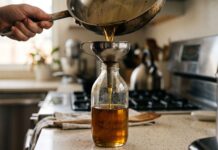
The correct protocol for capturing and storing used cooking oil at home is straightforward and requires minimal specialized equipment. The fundamental first step is patience. Hot oil poses a severe burn hazard and can easily melt plastic storage containers. The liquid must be left in the pan or deep fryer until it has reached room temperature. Once cooled, the oil should be passed through a fine metal sieve or a standard paper kitchen filter to remove burned food particles, breadcrumbs, and batter remnants.

Filtering is not merely an aesthetic preference; it is a vital step in maintaining the quality of the secondary raw material. Food particles left suspended in the oil will begin to decompose and ferment, increasing the acidity of the liquid and degrading its chemical value before it even reaches the refinery. Once filtered, the clear, used oil should be poured into a dedicated collection container. While some local municipalities provide specialized jerrycans for this purpose, citizens can almost always repurpose everyday household items.
An empty, thoroughly washed plastic water bottle or laundry detergent jug serves as an excellent storage vessel. Plastic is heavily favored over glass for this specific waste stream. Glass bottles are prone to shattering if dropped on the street or during the automated emptying processes at collection points, creating a severe physical hazard for sanitation workers and complicating the mechanical sorting of the waste. A durable plastic container with a tight-fitting screw cap ensures the safe and leak-proof accumulation of fats over several weeks or months.
Disposing of the filled container requires utilizing the specific infrastructure established by local waste management authorities. Throwing a sealed bottle of oil into the general mixed waste bin is a critical error. In a landfill, the plastic will eventually rupture under the immense pressure of compacted trash, releasing the oil to mix with other organic and chemical wastes. This toxic liquid mixture, known as leachate, seeps toward the bottom of the landfill, threatening to breach the protective liners and contaminate subterranean aquifers.
Pouring used oil into the organic waste or compost bin is equally destructive. While vegetable oil is technically an organic substance, it is highly detrimental to the industrial composting process. The composting of food scraps relies on aerobic digestion, where oxygen-breathing microorganisms break down the matter into nutrient-rich fertilizer. The introduction of liquid fats coats the organic material, blocking oxygen and shifting the pile into an anaerobic state. This ruins the quality of the compost, generates foul odors, and forces waste facilities to reject the contaminated batch.
The proper destination for the collected oil varies depending on local municipal infrastructure. Many cities have deployed specialized collection bins along city streets or adjacent to supermarkets and gas stations. These brightly colored receptacles are designed specifically to receive used cooking oil. In some jurisdictions, citizens are required to pour the oil directly from their home container into a large communal vat, taking their empty bottle back home. In other areas, the protocol dictates dropping the entire sealed plastic bottle directly into the collection unit.
For residents without access to street-level bins, the municipal ecological island or recycling center remains the primary drop-off point. These supervised facilities possess large, secure storage tanks where residents can safely empty their accumulated fats. The development of this urban collection network represents a significant logistical achievement, designed to bridge the gap between individual household habits and massive industrial biorefineries that require a steady stream of secondary raw materials.
When properly collected and integrated into the circular economy, used cooking oil undergoes a remarkable transformation from a hazardous pollutant into a highly valuable resource. Tanker trucks transport the collected fats to specialized purification plants where the liquid is heated, centrifuged, and filtered to remove residual water and microscopic impurities. This purified feedstock is then transferred to advanced biorefineries, where it undergoes a sophisticated chemical process known as transesterification.
During transesterification, the triglycerides in the vegetable oil react with an alcohol, typically methanol, in the presence of a catalyst. This reaction breaks the molecular bonds, separating the glycerin from the fatty acids and producing Fatty Acid Methyl Esters, commonly known as biodiesel. This renewable fuel can be blended with traditional petroleum diesel and used in standard internal combustion engines, significantly reducing the emission of particulate matter, sulfur dioxide, and unburned hydrocarbons.
Modern chemical engineering has also developed an even more advanced application known as Hydrotreated Vegetable Oil. By treating the purified cooking oil with hydrogen under high temperature and pressure, refineries produce a premium, drop-in biofuel that is chemically identical to fossil diesel. Hydrotreated Vegetable Oil burns exceptionally cleanly and can reduce lifecycle greenhouse gas emissions by up to ninety percent compared to traditional fossil fuels, playing a vital role in the decarbonization of heavy transport, aviation, and maritime shipping sectors.
Beyond the energy sector, the recovered lipids find their way into a surprising array of industrial applications. The glycerin separated during the biodiesel production process is captured, refined, and sold to the pharmaceutical and cosmetic industries for use in soaps, lotions, and medical syrups. The fatty acids are utilized in the manufacturing of eco-friendly industrial lubricants, mold release agents for the construction industry, and even as a fundamental building block in the emerging field of bio-based plastics.
Navigating the specific disposal rules can occasionally feel overwhelming, given the fragmented nature of local waste management policies. The exact method for dropping off the oil, the location of the bins, and the acceptable collection containers can change dramatically simply by crossing a municipal border. This is where modern digital tools bridge the information gap. The SmartRicicla app functions as an indispensable guide for everyday waste management. Utilizing precise geolocation, the application instantly identifies the user’s current municipality and delivers the exact, updated rules for local waste separation. Whether dealing with a bottle of frying oil at home or managing unfamiliar recycling protocols while on vacation, the app provides immediate clarity, eliminating the confusion that often leads to improper disposal.
Transforming a highly damaging household waste into a driver of the circular economy requires nothing more than a slight adjustment to daily kitchen routines. The moment a frying pan cools or a can of preserved vegetables is emptied, a physical choice materializes. Pouring those residual fats down the drain guarantees immediate environmental damage and long-term infrastructural costs. Choosing to filter, store, and drop off that same liquid guarantees its rebirth as clean energy or sustainable industrial materials, proving that complex global environmental solutions often begin right at the kitchen sink.