



















The global transition toward clean energy, electrified mobility, and resilient digital infrastructure has dramatically reshaped the geopolitics of industrial supply chains. For decades, modern manufacturing relied on a linear extractive model that extracted resources in one corner of the planet, processed them in another, and discarded them into landfills after a brief operational lifespan. Today, this unsustainable rhythm is colliding with ecological boundaries and acute resource bottlenecks. Critical raw materials, ranging from rare earth elements essential for wind turbine magnets to lithium, cobalt, and platinum group metals crucial for battery storage and power electronics, have become the strategic bedrock of contemporary society. In response to this pressing challenge, Italy has taken a decisive leap toward circular autonomy by unveiling its first integrated technological hub dedicated to critical raw materials, establishing a dynamic bridge between high-level laboratory research and market-ready industrial implementation.
Presented officially at the Ecomondo exhibition in Rimini, the country’s foremost environmental and circular economy forum, this landmark initiative is spearheaded by ENEA, the Italian National Agency for New Technologies, Energy and Sustainable Economic Development. Designed as an open, collaborative platform distributed across three key Italian regions, the new infrastructure represents a structural evolution in how research institutions support private enterprise. Rather than conducting experimental research in isolation, the hub is engineered to guide enterprises through every stage of their ecological transformation. From the very earliest phases of sustainable product blueprinting and recyclability auditing to hydrometallurgical recovery and advanced additive manufacturing, the initiative provides a comprehensive industrial testing ground capable of de-risking circular investments for businesses large and small.
The creation of this national hub addresses a deeply felt vulnerability across the European economic landscape. With the European Union pushing forward ambitious industrial decarbonization targets and implementing legislative frameworks such as the Critical Raw Materials Act, European manufacturing must rapidly decouple growth from virgin mineral extraction. Achieving this objective requires technological infrastructure capable of harvesting high-value metals and polymers directly from domestic secondary streams. Supported by over thirteen million euros in European funding through NextGenerationEU and Italy’s National Recovery and Resilience Plan, this new network embodies a forward-looking strategy that treats industrial scrap, obsolete microchips, and decommissioned renewable energy assets not as burdensome waste, but as the richest strategic mines of the twenty-first century.
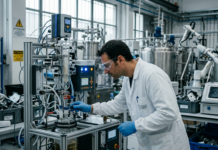
Structurally, the technological hub is organized into seven specialized facilities situated across Emilia-Romagna, Lazio, and Puglia, creating a specialized corridor of sustainable innovation. Three dedicated laboratories are established at the Casaccia Research Centre on the outskirts of Rome. Here, the scientific focus centers squarely on the frontier of secondary resource valorization. Casaccia’s multidisciplinary teams have spent years refining eco-friendly metallurgical processes, sustainable chemical separation techniques, and mechanized sorting methods capable of processing intricate end-of-life goods. In these facilities, researchers dismantle and treat complex electronic consumer goods, telecommunication components, and industrial production residue, demonstrating how valuable elements can be selectively recovered while minimizing carbon emissions and avoiding the harsh chemical reagents typical of traditional mining.
Meanwhile, the hub’s southern node at the Brindisi Research Centre in Puglia focuses on advanced material characterization and the development of next-generation circular composites. In these laboratories, scientific investigation turns toward biological sources and reclaimed industrial polymers, synthesizing resilient hybrid materials that can serve as direct substitutes for carbon-intensive petroleum derivatives and imported strategic minerals. The Brindisi campus exemplifies the convergence of ecological chemistry and advanced engineering, focusing on formulating composites that not only demonstrate superior structural performance during their working life but are fundamentally designed to be disassembled, remanufactured, or organically integrated into secondary cycles without thermal degradation.
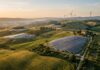
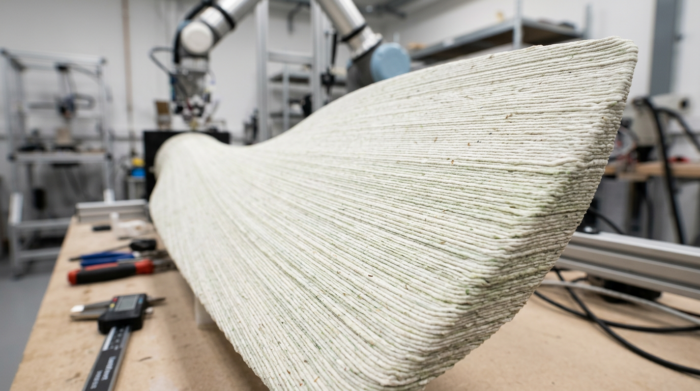
The practical, tangible potential of this research is strikingly illustrated by a showcase centerpiece presented to visitors at Ecomondo: a fully functional, one-to-ten scale prototype of an innovative wind turbine. Manufactured entirely through additive manufacturing and large-scale 3D printing utilizing bio-based and recycled composite materials developed within the Brindisi laboratories, the wind turbine demonstrates how the clean energy sector can resolve one of its most persistent environmental paradoxes. While renewable energy devices generate clean electricity, their structural components, particularly giant composite rotor blades, have historically proven remarkably difficult and costly to recycle at end-of-life. By proving that high-performance structural wind components can be additive-manufactured from regenerated and renewable feedstocks, the hub provides an immediate industrial pathway toward closed-loop clean energy production.
Innovation within the Brindisi center is further enhanced by an advanced laboratory completely dedicated to Virtual Reality and Augmented Reality for circular industrial processes. This immersive digital facility serves as an interactive incubator where researchers, materials scientists, and product designers can simulate the entire lifecycle of an industrial component long before physical prototypes are manufactured. Using high-fidelity digital twins, engineers can test how novel formulations will behave under physical stress, explore how product architectures can be disassembled by automated sorting robots, and visualize the molecular behavior of composites. This computational capability dramatically accelerates the research-to-market timeline, cutting down experimental material waste, reducing development costs, and providing small and medium-sized enterprises with sophisticated digital testing capabilities that were previously restricted to major multinational corporations.
The third geographical pillar of the network is located in the industrial heartland of Faenza, in Emilia-Romagna. Recognized internationally for its historical legacy and contemporary excellence in advanced ceramics and advanced material sciences, the Faenza laboratory focuses on holistic product innovation. The mandate here is centered upon the rigorous principles of ecodesign, scrutinizing product geometries, multi-material bonding agents, and chemical compositions to guarantee recyclability from day one. By collaborating directly with mechanical, aerospace, and consumer goods manufacturers, Faenza ensures that the products of tomorrow are conceived with their eventual recovery in mind, eliminating toxic stabilizers and facilitating rapid separation of critical raw materials when the product eventually reaches retirement.
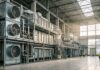
This seven-laboratory network does not operate in a vacuum; it seamlessly interconnects with an array of established, world-class ENEA research infrastructures that have already paved the way for industrial circularity in Italy. Among these is the MAIA facility, an advanced additive manufacturing platform that explores metallic and composite 3D printing for specialized applications, and the PRISMA center, which leads research into the chemical and mechanical recycling of challenging plastic streams. Crucially, the hub also leverages the pilot-scale capabilities of the ROMEO experimental plant, an internationally acclaimed hydrometallurgical facility dedicated to recovering precious and strategic metals, including gold, silver, copper, and rare earths, from discarded printed circuit boards found in computers and mobile telephones. By uniting these complementary capabilities under a single strategic umbrella, Italy now possesses a continuous, integrated innovation pipeline running from microscopic material synthesis to full-scale recovery.
Parallel to the launch of the critical raw materials hub, ENEA introduced an expansive modernization of its biotechnology infrastructure at the Rimini fair, emphasizing how biological mechanisms hold the key to solving complex industrial challenges. This biotechnological ecosystem gathers integrated platforms, analytical laboratories, and scalable pilot plants to pioneer solutions across four pivotal domains: biomanufacturing, resource recovery and remediation, agrifood sustainability, and the systemic One Health paradigm. In the realm of biomanufacturing, researchers harness micro-organisms and biological processes to transform forestry waste, agri-industrial byproducts, and municipal organic residues into high-value biochemicals, functional biopolymers, and bioactive molecules, replacing fossil resources with circular biological chemistry.
In environmental regeneration, the biotechnology platform deploys specialized natural consortia, bio-electrochemical systems, and phytoremediation techniques to purify contaminated groundwater, clean industrial wastewater, and reclaim valuable mineral salts from municipal sludge. Instead of treating urban and industrial wastewater as a hazardous burden requiring energy-intensive purification, these cutting-edge pilot plants demonstrate how wastewater treatment facilities can be transformed into biorefineries that generate green biomethane, biofertilizers, and clean industrial water. This circular biological perspective reinforces the broader mission of the critical raw materials hub by providing biological pathways to extract and concentrate metals from dilute industrial effluents and mining tailings through the natural action of specialized bio-mining micro-organisms.
The agrifood and One Health dimensions of this biotechnological expansion further reflect a mature, holistic comprehension of environmental sustainability. Recognizing that human health, animal wellness, and ecological balance are fundamentally interdependent, ENEA’s biotechnological laboratories are developing resilient agro-ecological systems, utilizing precision biocontrol agents to replace synthetic pesticides, and using controlled plant bio-factories to produce therapeutic proteins, high-value vaccines, and specialized antibodies. At the same time, specialized research units are actively investigating the cellular and biological consequences of airborne particulate pollutants and emerging environmental contaminants, providing the hard empirical data needed to inform public health regulations and circular urban design.
Technological hardware and laboratory machinery, however, can only transform an economy if they are accompanied by widespread regulatory understanding and shared knowledge across the business community. To address this crucial interface, Ecomondo served as the launchpad for EcodesignItalia.it, an ambitious institutional information platform developed in close coordination with the Italian Ministry of Enterprises and Made in Italy. The newly launched digital portal serves as a navigation beacon for Italian companies adapting to the sweeping demands of the European Union’s Ecodesign for Sustainable Products Regulation. As European standards mandate enhanced durability, reparability, energy performance, and digital product passports across consumer and industrial sectors, the platform offers regulatory briefings, practical methodological toolkits, and actionable guidelines designed to prevent compliance hurdles from stalling industrial competitiveness.
The unveiling of this portal comes on the heels of the Ecodesign in Tour initiative, an intensive outreach program that connected national researchers with local manufacturers across key manufacturing epicenters including Varese, Carpi, and Prato. By engaging deeply with small and medium-sized textile and manufacturing enterprises within their historical districts, the tour surfaced the specific operational barriers, testing requirements, and technical anxieties felt by businesses confronting new circular mandates. The practical lessons gleaned from these regional dialogues have been woven directly into the digital portal and will shape forthcoming institutional support mechanisms, ensuring that European environmental targets empower local industrial heritage rather than imposing administrative burdens.
The holistic approach on display at Ecomondo is further evidenced by a dense calendar of scientific symposiums and public workshops led by national experts throughout the four-day gathering. Key sessions tackle complex systemic challenges, including the creation of national industrial symbiosis networks where the thermal, material, and water outputs of one factory become the baseline inputs of an adjacent enterprise. Other roundtables confront the critical challenge of systemic circularity metrics, illustrating how corporate environmental declarations must move beyond ambiguous branding toward standardized, verified methodology across global value chains, utilizing transparent Life Cycle Assessment frameworks.
Ultimately, the establishment of this Critical Raw Materials Hub, paired with expanded biotechnology facilities and ecodesign services, signals an optimistic, highly pragmatic shift in European environmental policy. For too long, conversations surrounding sustainability were framed almost entirely around restriction, reduction, and de-growth. Italy’s integrated scientific infrastructure presents a compelling alternative narrative: a robust, proactive economic strategy where environmental responsibility actively drives technological sovereignty, high-skilled employment, and global industrial leadership. By turning academic laboratories into accessible open facilities where businesses can co-create regenerative products, Italy is demonstrating that the road to ecological resilience is paved with scientific ingenuity, cross-regional cooperation, and an unwavering commitment to genuine circular design.
Fonte: ENEA