














Between August 21 and 26, the pavilions of the Rimini Fair host a direct confrontation on the mechanics of national energy strategy. Researchers from ENEA are leaving their laboratories to set up interactive outposts within Piazza MASE, targeting a general public often disconnected from the technical complexities of grid management and decarbonization. The national agency is bringing two starkly different but functionally complementary models to the forty-seventh edition of the Meeting: the massive, centralized physics of advanced nuclear technology and the hyper-local, decentralized architecture of Renewable Energy Communities.
The core of this scientific deployment takes place on Monday, August 24, inside the Sala Convegni. Starting at 15:00, ENEA experts lead a dedicated session to dissect the current state of atomic energy, framing it strictly within the country’s need for grid stability and reduced reliance on foreign energy imports. The discussion seeks to bypass long-standing ideological debates, focusing instead on the empirical data surrounding new generation reactors and their specific technical integration into modern power networks.
This public engagement operates as a direct mandate of the Nuclear Research Program, a structural three-year plan financed by the Ministry of Environment and Energy Security. The initiative tasks ENEA, operating alongside the National Research Council as a co-realizer and supported by the RFX Consortium, with laying the rigorous technical groundwork needed to evaluate nuclear capacities. The program explicitly aims to rebuild domestic expertise and secure technological independence in a highly specialized sector, tracking the evolution of global reactor designs and safety protocols.
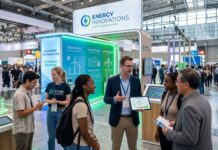
Over the course of the six-day event, specialists staff a permanent information point at stands A5 and C5 to field unscripted questions from visitors. The agency seeks to clarify the functional differences between nuclear fission, which splits heavy atomic nuclei to release energy, and nuclear fusion, which aims to replicate the stellar process of combining light isotopes. The presence of the RFX Consortium highlights the specific Italian contribution to advanced plasma physics and magnetic confinement, areas where national research institutes have historically maintained a strong international presence despite domestic energy policies.
The choice to engage directly with the public at a massive gathering like the Rimini Meeting reflects a distinct strategic shift by state agencies. Decarbonization models increasingly require community consensus to overcome local opposition to new energy infrastructure. By placing technical experts at a booth, the Ministry and ENEA attempt to dismantle heavy technical jargon. Researchers address inquiries regarding reactor safety protocols, the physics of radioactive decay, and the actual timelines for the commercial deployment of advanced energy systems currently undergoing international testing.
Transitioning from the macro-scale of national grid baseloads to the micro-scale of neighborhood power generation, ENEA introduces a completely different energy paradigm on August 24 and 25. During these two days, the stand activates a specialized info point dedicated entirely to Renewable Energy Communities. Here, the focus shifts from the manipulation of atomic structures to the legal and physical mechanisms of sharing solar and wind power among private citizens and local businesses.
Renewable Energy Communities represent a profound change in how power is distributed across the landscape. Instead of relying solely on distant, large-scale power plants, these localized grids allow consumers to become active producers. ENEA experts map out the regulatory frameworks and the physical hardware required to link rooftop solar panels, local battery storage systems, and domestic consumption patterns into a single, optimized digital network. The goal is to demonstrate how energy produced within a specific geographic radius can be consumed locally, drastically reducing transmission losses and lowering utility bills for participants.
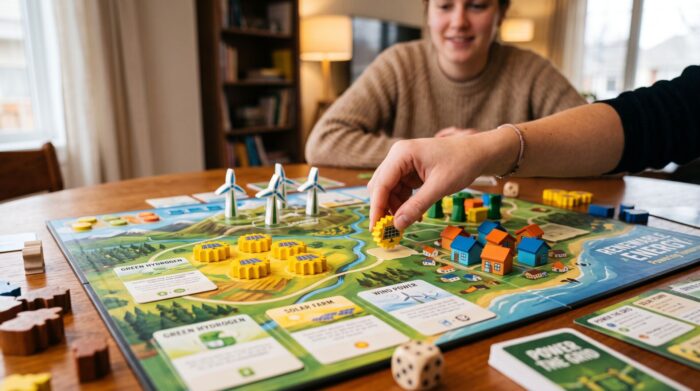
To translate the abstract mathematics of energy distribution into a tangible experience, the agency utilizes gamification. Visitors to the Renewable Energy Communities info point can participate in sessions of “Power-up!”, a custom-designed board game. Through play, citizens navigate the logistical hurdles of balancing power supply and demand, managing fluctuating weather conditions, and distributing shared resources among community members. This tactile approach breaks down the barriers of economic and engineering terminology, allowing laypeople to grasp the immediate benefits and operational realities of decentralized power sharing.
The dual presence at the Rimini Fair underscores a broader institutional strategy directed by the Ministry of Environment and Energy Security. Achieving long-term climate targets and securing the national energy supply cannot rely on a single technological silver bullet. It requires the simultaneous development of high-density power sources capable of providing continuous baseload energy, alongside the rapid proliferation of agile, community-owned renewable arrays. ENEA stands at the intersection of these two paths, providing the necessary scientific oversight and engineering validation for both.
By mobilizing its top researchers alongside the National Research Council and the RFX Consortium, ENEA signals the gravity of the current energy transition. The three-year Nuclear Research Program requires sustained funding and rigorous academic focus, but it also necessitates public transparency. Citizens need to understand how public funds are being allocated to secure the nation’s energy future, whether those funds are directed toward superconducting magnets for fusion experiments or the legal structures required to build a solar cooperative in a small municipality.
The physical setup within Piazza MASE serves as a microcosm of the entire energy debate. On one side of the stand, discussions delve into the extreme temperatures of plasma physics and the rigorous safety containments of nuclear engineering. On the other side, conversations center on community cooperation, digital smart meters, and local energy autonomy. Both dialogues share a common objective: insulating the domestic economy from the volatility of global fossil fuel markets and drastically reducing greenhouse gas emissions across the industrial and residential sectors.
Engaging a demographic as broad as the attendees of the Rimini Meeting allows national institutes to act as a sounding board for national policies. Researchers gather valuable feedback on the primary concerns of citizens, identifying which aspects of the energy transition generate the most skepticism or confusion. This direct line of communication informs future outreach strategies and helps policymakers tailor their technical guidelines to better align with the practical realities of Italian municipalities and local industries.
The integration of different scientific disciplines is evident in the structural partnerships supporting the exhibition. The collaboration between ENEA and the National Research Council ensures that both applied engineering and fundamental physics are represented. Meanwhile, the involvement of the RFX Consortium brings specialized knowledge in experimental fusion reactors, illustrating Italy’s active role in international megaprojects designed to unlock virtually limitless, clean energy for the latter half of the century.
As energy systems grow increasingly complex, the role of national research agencies expands beyond laboratory experiments and theoretical modeling. They must act as impartial educators, translating decades of data into actionable knowledge for the public. The presence of these institutions at mainstream cultural and social events prevents the spread of misinformation regarding critical infrastructure and ensures that public debates on energy policy are grounded in verified scientific consensus rather than political rhetoric.
The physical deployment in Rimini marks just one phase of a much longer institutional campaign. When the fair concludes and the stands are disassembled on August 26, the researchers return to their facilities to continue executing the mandate of the three-year Nuclear Research Program. Simultaneously, the local administrators and citizens who engaged with the “Power-up!” simulations carry the blueprints for Renewable Energy Communities back to their own territories, tasked with turning shared energy concepts into functioning, localized grids.