


























Every year on October sixteenth, the global community gathers under the banner of World Food Day to commemorate the founding of the Food and Agriculture Organization of the United Nations in 1945. What originated in the mid-twentieth century as an institutional mandate to eradicate famine and boost agricultural output has undergone a profound conceptual evolution. In our contemporary world, where the repercussions of climatic disruption, geopolitical instability, and biodiversity loss intersect, the conversation around food has expanded far beyond the mere arithmetic of calorie production. Today, World Food Day stands as a powerful moral and ecological sounding board, compelling us to address a foundational question: how can we sustainably feed a growing humanity without exhausting the finite biological systems that sustain all terrestrial life?
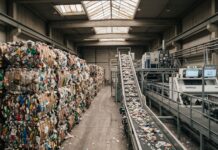
The global food landscape today presents an acute and heartbreaking paradox that exposes the structural flaws of our prevailing industrial food architecture. According to recent assessments by international organizations, more than seven hundred million people endure persistent undernourishment, while simultaneously over two billion individuals suffer from overweight or obesity, frequently accompanied by micronutrient deficiencies linked to diets heavy in ultra-processed formulations. At the same time, humanity squanders an estimated one billion metric tons of edible food every single year across harvesting, transportation, processing, retail, and domestic consumption. This staggering volume of waste does not merely represent squandered nourishment; it embodies billions of gigajoules of wasted energy, trillions of liters of squandered freshwater, and immense tracts of cleared land that produce food destined only to decompose in municipal landfills, where it decomposes into potent methane emissions.
To genuinely grasp the scale of the challenge commemorated on World Food Day, one must reckon with the profound environmental footprint of the conventional agro-industrial complex. Modern intensive agriculture has historically relied on a linear, extractive model characterized by vast monocultures, intensive petroleum-derived chemical inputs, synthetic nitrogen fertilizers, and intensive tillage. While this paradigm generated unprecedented yield increases throughout the Green Revolution, it came at an exorbitant ecological cost. Agriculture currently accounts for approximately one-quarter to one-third of total global anthropogenic greenhouse gas emissions, demands seventy percent of accessible freshwater withdrawals, and remains the primary driver of terrestrial deforestation and habitat conversion. Soil, the miraculous living skin of our planet that underpins ninety-five percent of our food supply, is suffering systemic degradation, losing organic matter and microbial diversity at rates far outstripping natural pedogenesis.
Recognizing the right to foods—in the plural—illuminates a critical pathway forward. This principle underlines that genuine food security transcends uniform caloric delivery; it demands nutritional adequacy, ecological vitality, cultural appropriateness, and equitable economic access. Over the past century, the global food system has undergone an alarming narrowing of biological diversity. Of the tens of thousands of edible plant species known throughout human history, a mere three crops—rice, wheat, and maize—now provide roughly half of all human plant-based calories. This hyper-concentration exposes our food supply to extreme vulnerabilities in the face of emergent pathogens, unpredictable weather events, and prolonged droughts catalyzed by climate breakdown. Diversifying the global plate by reviving heritage grains, underutilized legumes, perennial vegetables, and regional staple crops constitutes both an imperative for human wellness and an indispensable climate resilience strategy.
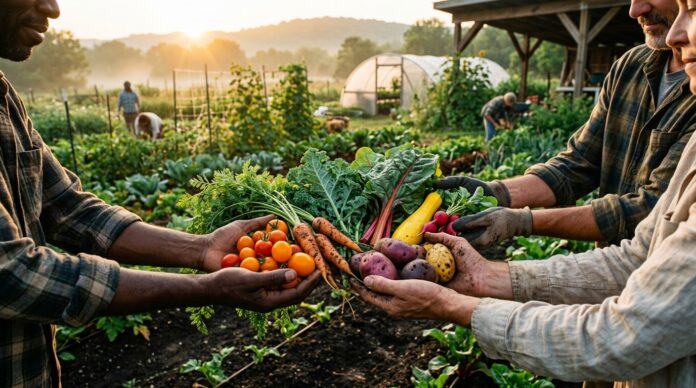
At the very heart of this systemic transformation lies the paradigm of regenerative agriculture. Rather than treating farmland as an inert substrate requiring continuous infusions of synthetic chemistry, regenerative practices emulate natural ecological successions to restore living soils. Techniques such as continuous ground cover through living multi-species cover crops, minimal soil disturbance through no-till farming, holistic rotational grazing, and complex crop rotations act in concert to reconstruct soil structure and invite subterranean biodiversity back into the field. Living soils enriched with stable humus function as dynamic biological sponges, vastly improving water infiltration and moisture retention during dry spells, mitigating erosion during extreme rainfall, and drawing down atmospheric carbon dioxide into stable subterranean sinks. In this way, agriculture transitions from being one of the world’s most damaging carbon emitters into an active instrument of ecological restoration.
Closely aligned with regenerative farming is the philosophy of agroforestry, an age-old yet revitalized practice that integrates trees, shrubs, crops, and livestock into synergistic multi-layered landscapes. By breaking the monotony of industrialized landscapes, agroforestry creates microclimates that shield sensitive crops from scorching winds and heat waves, enhances pollinator habitats, and establishes natural biological pest controls. The deep, expansive root networks of woody perennials draw up deep-seated minerals, cycle nutrients back to the upper soil layers through leaf litter, and prevent nutrient runoff into waterways. For smallholder farmers, who produce roughly a third of the world’s food on small plots of land, agroforestry also delivers economic resilience by diversifying revenue streams through timber, nuts, fruits, and fodder throughout the calendar year.
Alongside landscape-level ecological renewal, the transition to a sustainable food system requires the rapid deployment of circular economic principles across the entire supply chain. In a circular bioeconomy, the concept of agricultural waste is rendered obsolete; every byproduct represents an input for another biological or industrial cycle. Food processing side-streams—such as fruit skins, brewing grains, and dairy whey—are increasingly upcycled into functional ingredients, natural biomaterials, and high-value bioactive compounds. Agricultural residues that cannot be safely diverted to human consumption can be converted through controlled fermentation or black soldier fly larvae bioconversion into nutrient-rich animal feed and organic biofertilizers, displacing imported soy and fossil-derived fertilizers. Organic matter that reaches municipal waste streams can be channeled into industrial composting facilities and anaerobic digestion systems, generating renewable biogas while yielding nutrient-dense digestate to replenish depleted rural soils.

Cities, which consume nearly eighty percent of all food produced globally, are emerging as dynamic laboratories for circular food innovation. As urban populations continue to expand, reconnecting urbanites with food production is essential to revitalizing our ecological literacy. From community rooftop gardens and peri-urban market gardens to closed-loop commercial aquaponic facilities that integrate fish farming with soil-free hydroponic horticulture, cities are exploring innovative ways to cultivate fresh produce using minimal land and water footprints. These hyper-local production models slash transit distances, drastically curtail post-harvest refrigeration losses, and provide urban populations with vital green infrastructure that tempers the urban heat island effect while fostering community solidarity.
Crucially, achieving the ambitious visions elevated by World Food Day is impossible without deep, conscious shifts in consumer habits and cultural values. In affluent societies and urbanized centers, dietary transitions toward plant-rich eating patterns offer unmatched environmental dividends. Shifting the center of the culinary plate from resource-intensive industrial meat and dairy toward a colorful kaleidoscope of pulses, whole grains, nuts, and seasonal vegetables significantly decreases the land, energy, and water requirements of our diets. This shift does not require an absolute rejection of traditional animal husbandry; rather, it calls for an intentional reorientation away from destructive concentrated animal feeding operations toward pastured, ecologically integrated livestock systems where animals fulfill functional ecological roles within living farm ecosystems.
Consumer action must also confront our domestic relationship with food waste. The unexamined habit of buying in excess, misunderstanding cosmetic packaging standards, and throwing away edible nourishment has normalized a culture of disposal that dishonors the labor, water, and soil life invested in every harvest. Relearning culinary traditions that prioritize root-to-stem cooking, mastering artisanal preservation techniques such as lacto-fermentation, planning grocery purchases intentionally, and supporting community food rescue networks represent immediate, accessible steps that align personal ethics with planetary boundaries. When households treat food with the reverence it warrants, they actively dismantle the structural drivers of systemic waste.
Empowering smallholder farmers, indigenous agrarian communities, and female food producers is equally central to this transformation. Despite generating an enormous share of our global sustenance, small-scale growers routinely face systemic barriers, including precarious land tenure, limited access to low-interest capital, inadequate cold-chain infrastructure, and unfair competition from heavily subsidized industrial commodities. Indigenous agricultural techniques, developed over millennia of intimate observation and cohabitation with regional ecosystems, offer profound masterclasses in climate adaptation, water conservation, and seed sovereignty. When public policies recognize customary land rights, incentivize the preservation of native landrace seed banks, and provide infrastructure that connects small producers directly with local regional markets through community-supported agriculture programs, food systems become intrinsically more resilient and democratic.
Technological advancement, when guided by ecological awareness, can serve as a potent accelerator for sustainable food systems. Open-source precision agriculture tools, low-cost sensor arrays that monitor soil moisture in real time, satellite-guided weather forecasting services, and decentralized digital networks that match farm yields directly to regional demand can drastically reduce resource use while elevating smallholder livelihoods. Unlike proprietary technological packages that trap farmers in cycles of perpetual technological dependence and chemical debt, agroecological technologies democratize information, giving producers the insight they need to adapt to volatile climatic conditions without compromising biological diversity.
The role of regulatory policy and economic realignment cannot be overstated in this global transition. For decades, international agricultural subsidies have funneled hundreds of billions of dollars each year into supporting chemical-intensive monocultures, feed crops for factory farms, and environmentally catastrophic fishing fleets. World Food Day serves as an urgent reminder for governments to realign public subsidies so that fiscal rewards flow directly toward ecosystem stewardship, soil regeneration, organic conversion, and public health outcomes. Implementing true-cost accounting frameworks—which reveal the hidden costs of industrial food production on human health, water purification, and greenhouse emissions—will naturally make sustainably produced food the most affordable and accessible option for all socioeconomic strata.
As the sun sets on another World Food Day, the lessons presented to global society are both humbling and invigorating. Food is not a manufactured commodity to be treated solely as a transaction on financial exchanges; it is an intimate biological covenant between humanity and the Earth. Every seed sown with intention, every hectare of soil restored with compost, every meal shared without waste, and every public policy designed to protect our ecosystems represents a tangible vote for a regenerative tomorrow. We possess the scientific clarity, the indigenous heritage, the circular tools, and the collective wisdom necessary to establish an agricultural paradigm that feeds all of humanity while reviving our living world. Embracing this holistic transition is our common responsibility, charting a course toward an equitable, fertile, and thriving world where good food remains a universal birthright for generations to come.