

























A transformative industrial transition is taking shape in the heart of Piedmont, marking a watershed moment in how contemporary manufacturing interacts with our planetary atmosphere. In Cuneo, home to the largest tire manufacturing facility operated by Michelin in Western Europe, the sky is no longer merely a backdrop to production, but an active reservoir of circular resources. Through an innovative agreement between Michelin Italiana and CarpeCarbon, an ambitious Italian climate-tech venture, an industrial-scale Direct Air Capture plant will be integrated directly into ongoing tire production processes. This initiative represents far more than an incremental decarbonization experiment; it demonstrates how heavy industry can move beyond mitigation alone to participate actively in atmospheric restoration while securing localized supply chains for critical raw materials.
Atmospheric carbon dioxide concentrations have reached levels that compel humanity to look beyond conventional emission abatement. While phasing out fossil fuels and achieving operational efficiency remain the cornerstone of any genuine climate strategy, scientific consensus now makes it indisputable that billions of metric tons of legacy carbon emitted since the advent of the Industrial Revolution must be retrieved from the ambient air. Yet deploying carbon removal technologies at scale has historically been hindered by astronomical capital expenditures, prohibitive energy requirements, and the absence of immediate commercial demand. The collaboration unfolding in Cuneo bridges this economic and technical chasm by embedding Direct Air Capture within a functioning factory that already utilizes carbon dioxide as an operational gas.
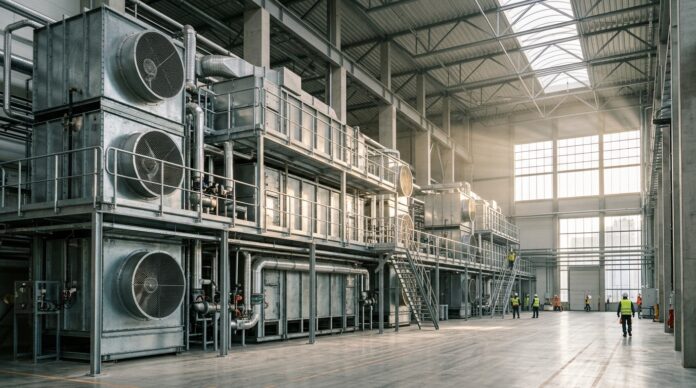
Under the terms of this partnership, CarpeCarbon will deploy an advanced, modular Direct Air Capture installation with an initial nominal intake capacity of three hundred metric tons of atmospheric carbon dioxide annually. Slated to commence operations in the second half of 2027, the facility is engineered to extract ambient carbon and purify it on-site. Rather than relying on long-distance road transport to deliver commercial carbon dioxide from distant petrochemical or fertilizer complexes, Michelin will tap into this locally harvested atmospheric stream to satisfy an essential portion of its internal demand. Simultaneously, any surplus gas drawn from the air that exceeds the facility’s immediate production schedule will be managed autonomously by CarpeCarbon and channeled into permanent geological mineralization, transforming fugitive greenhouse gases into immutable stone.
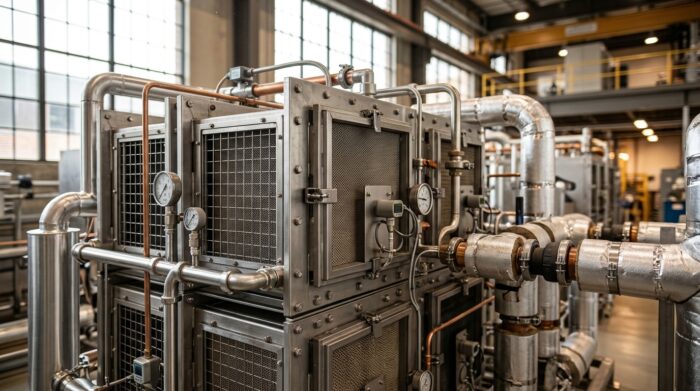
The physical logic of integrating carbon capture directly inside an existing industrial complex addresses one of the most stubborn criticisms frequently leveled against Direct Air Capture: its substantial energy footprint. Ambient carbon dioxide is exceptionally dilute, occurring at roughly four hundred and twenty parts per million across the globe. Extracting such a dispersed gas requires immense throughput of air and a reliable thermal energy source to regenerate the chemical sorbents that trap the molecules. CarpeCarbon has designed a proprietary solid-sorbent architecture protected by multiple international patents and certified with the CE mark, purposely engineered to operate using low-grade thermal energy. Instead of burning additional fuel or monopolizing precious high-voltage renewable electricity, the Cuneo facility will harvest residual waste heat naturally generated by tire curing and auxiliary plant processes, complemented by solar thermal inputs where available, achieving an unprecedented degree of thermodynamic synergy.
Carbon dioxide is an indispensable, though often overlooked, commodity in modern manufacturing. Across the globe, approximately two hundred and thirty million metric tons of carbon dioxide are consumed each year in specialized commercial applications ranging from food preservation, water treatment, and electronic fabrication to industrial welding, chemical synthesis, and inerting. In high-temperature rubber processing and tire manufacturing, carbon dioxide acts as a dependable inert shield. Its chemically unreactive properties prevent oxidative degradation, inhibit fire hazards, and preserve the physical integrity of vulcanization systems. Heretofore, factories have almost universally procured this essential gas from third-party industrial gas merchants, who typically harvest carbon dioxide as a byproduct of fossil ammonia synthesis, fossil fuel combustion, or natural gas refining.
Relying on external merchant supply chains exposes manufacturing hubs to acute market volatility, freight price swings, and geographic bottlenecks. When high natural gas prices force fertilizer facilities to idle their production lines, downstream industries often face acute shortages of commercial carbon dioxide, triggering unexpected operational interruptions. By capturing carbon directly on-site, a factory effectively insulates itself from external market vagaries, securing a dependable, resilient, and virtually inexhaustible supply of an essential operating gas. Furthermore, replacing fossil-derived carbon dioxide with molecules extracted from surrounding ambient air ensures that routine industrial handling does not inject newly unearthed fossil carbon into our global biosphere.
To evaluate the true ecological value of such projects, one must draw a rigorous distinction between short-cycle carbon utilization and authentic carbon removal. When atmospheric carbon dioxide is repurposed for inerting machinery or manufacturing short-lived products, it generally diffuses back into the environment once the specific task is complete. While this closed loop prevents net additions of fossil carbon into the atmosphere—serving as a carbon-neutral alternative to conventional procurement—it does not diminish the absolute stock of historic atmospheric carbon. True carbon dioxide removal, or negative emissions, occurs exclusively when the harvested molecules are permanently isolated from the carbon cycle for geological timeframes.
The Cuneo agreement harmonizes these two distinct paradigms within a single operational framework. By directing the extracted carbon dioxide that Michelin needs directly into factory equipment, the plant immediately avoids fossil carbon consumption. Meanwhile, every surplus kilogram captured by CarpeCarbon’s modular units that exceeds the factory’s operational appetite is earmarked for deep underground mineralization. In this permanent disposal process, carbon dioxide dissolved in fluid reacts spontaneously with reactive basaltic and ultramafic rock formations, precipitating into solid, inert carbonate minerals. Once trapped in crystalline rock deep beneath the Earth’s crust, the carbon can never escape back into the skies, generating durable, verifiable carbon removal credits that meet the highest standards of scientific integrity.
The catalyst behind this collaboration was Fondazione Michelin Sviluppo, an institution dedicated to invigorating regional economic dynamism and fostering high-potential entrepreneurial ventures throughout Piedmont. By linking the global manufacturing footprint of Michelin with the cutting-edge engineering prowess of CarpeCarbon, the foundation has demonstrated how local territorial ecosystems can serve as thriving incubators for European climate resilience. Legal and regulatory guidance for the agreement was steered by the advisory team at Fieldfisher Italy, navigating the intersection of proprietary intellectual property, energy integration, and environmental compliance necessary to make industrial Direct Air Capture a commercial reality.
This pioneering deployment in Cuneo is the pivotal milestone in CarpeCarbon’s calculated commercial trajectory. Founded in Turin, the company validated its technological viability at a pilot installation inaugurated in late 2025, which successfully reached Technology Readiness Level 6. Having proven that its proprietary solid sorbents can operate reliably under real-world conditions, CarpeCarbon is transitioning from laboratory validation to commercial demonstration. Company leadership has outlined a clear industrial scaling trajectory: elevating total annual capture capacity across all operating sites to five thousand metric tons by 2028 and expanding to fifty thousand metric tons per annum by 2030 through both co-located industrial installations and autonomous, solar-powered facilities deployed in non-arable regions.
The philosophical shift underpinning this deployment cannot be overstated. For decades, the global manufacturing sector has been cast exclusively as the primary culprit behind escalating global temperatures. While heavy industry undoubtedly bears a historic responsibility for fossil emissions, the integration of ambient capture technologies in Cuneo illustrates that manufacturing plants possess precisely the technical competencies, heat infrastructure, skilled workforce, and logistical networks required to execute atmospheric remediation. Factories can evolve from passive emission sources into dynamic climate infrastructure, using their scale to accelerate technologies that would otherwise languish in academic incubators.
Integrating Direct Air Capture within functional factory boundaries also mitigates the land-use conflicts and protracted permitting bottlenecks that often paralyze standalone climate-tech mega-projects. Greenfield carbon removal installations frequently require dedicated access roads, extensive electrical grid interconnections, and standalone civil works that provoke localized environmental resistance. Conversely, retrofitting compact, modular capture units within pre-existing industrial footprints utilizes already disturbed land, plugs into existing thermal infrastructure, and capitalizes on current industrial safety protocols, slashing deployment timelines while enhancing regional economic value.
From a European policy vantage, this initiative coincides with the enactment of the Net Zero Industry Act and the finalization of the Carbon Removal Certification Framework. As European institutions enforce stringent regulations on corporate net-zero claims and mandate traceable lifecycle analyses, manufacturers will face mounting pressure to eliminate fossil inputs across their tier-one and indirect supply chains. Projects that physically prove the coexistence of commercial production and genuine carbon dioxide removal establish a gold standard for European industrial competitiveness, illustrating that ambitious sustainability benchmarks can stimulate technological leadership rather than industrial decline.
The strategic deployment of modular Direct Air Capture across Italy holds unique geographic promise. The Italian peninsula boasts abundant geothermal reservoirs, substantial solar irradiance, extensive industrial corridors generating vast quantities of low-grade thermal waste, and deep basaltic rock formations exceptionally suited for mineral carbonation. By aligning the extraction of ambient carbon with localized geological storage, Italian enterprise is charting an autonomous pathway toward carbon stewardship that bypasses cross-border pipeline logistics and reduces reliance on volatile global supply chains.
Looking ahead to the facility’s scheduled activation in 2027, the Cuneo plant will serve as an open-air demonstration for industrial decision-makers across Europe and the globe. Engineers, plant managers, and environmental executives will observe firsthand how ambient carbon dioxide can be harvested from the Piedmontese sky, circulated through high-precision manufacturing equipment, and permanently entombed underground. This pragmatic synergy between corporate industry and cutting-edge climate engineering offers a compelling, optimistic vision for a circular carbon economy where atmospheric restoration and high-performance manufacturing proceed hand in hand.