
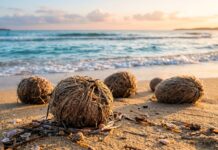





















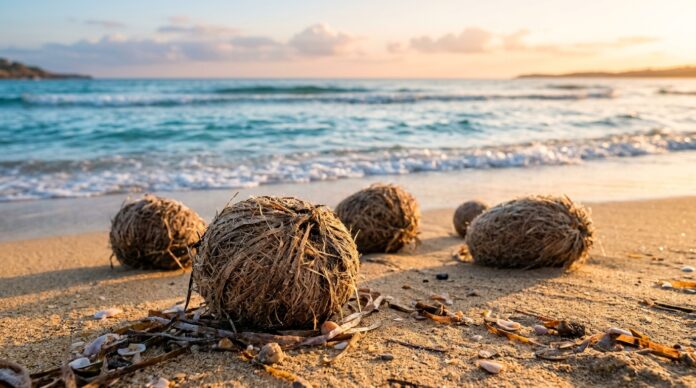
Strolling along Mediterranean shores during the autumn and winter months, beachgoers frequently encounter curious, felt-like spherical bundles scattered across the sand. Known colloquially as sea balls, Neptune balls, or scientifically as aegagropiles, these fibrous globes have long been celebrated as poetic reminders of the vibrant marine forests swaying beneath the waves. Formed by the relentless mechanical motion of coastal currents rolling the shed foliage and persistent leaf sheaths of the endemic seagrass Posidonia oceanica into compact orbs, these natural formations are an emblematic trademark of clean, ecologically rich waters. However, contemporary scientific scrutiny has cast a revealing new light upon these humble ocean wanderers, uncovering a reality that is as sobering as it is scientifically fascinating.
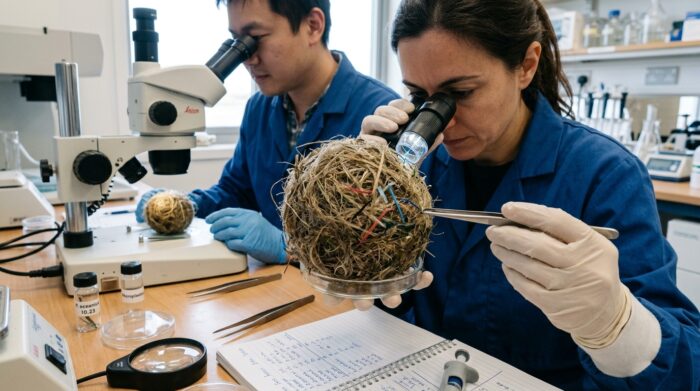
According to a landmark investigation conducted by researchers at the Italian National Agency for New Technologies, Energy and Sustainable Economic Development, widely recognized as ENEA, and documented in the international peer-reviewed journal Environments, marine plastic debris has firmly integrated itself into the physical fabric of these coastal structures. By analyzing samples collected across extensive stretches of the Italian shoreline, the team of environmental scientists observed that more than one out of every three aegagropiles examined contained discernible plastic particles and synthetic polymers tangled within its intricate meshwork of natural cellulose fibers.
The revelation that over thirty-five percent of these botanical spheres carry artificial polymers underscores the profound pervasiveness of synthetic pollution throughout the Mediterranean basin. For decades, the Mediterranean Sea has functioned as an enclosed aquatic cradle harboring extraordinary biodiversity, yet its geographic configuration, bordered by densely populated coastlines, intense maritime transport, and significant river discharges, makes it especially vulnerable to the accumulation of anthropogenic litter. Plastic bottles, abandoned fishing gear, single-use food packaging, and microscopic textile fibers break down under the relentless bombardment of solar ultraviolet radiation and mechanical wave action, transforming larger discarded items into an ubiquitous soup of secondary microplastics that permeates every layer of the water column.
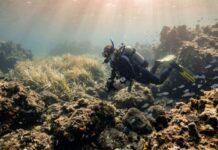
Yet within this troubling picture of environmental contamination lies an inspiring ecological insight regarding the defensive and filtering capabilities of underwater flora. Posidonia oceanica meadows are universally celebrated as the lungs of the Mediterranean, functioning as one of the planet’s most potent blue carbon sinks and offering indispensable habitats, nurseries, and feeding grounds for countless marine species. In addition to oxygenating coastal waters, stabilizing seafloor sediments, and attenuating wave energy to prevent beach erosion, these marine meadows are now proving to be active collectors and passive remediators of marine debris. Through the natural dynamics of hydrodynamic friction, loose seagrass fibers intertwine with floating and submerged plastic particles, weaving them into tight organic spheres that are eventually purged from the marine system and deposited directly onto the shore.
This ongoing entrapment process turns the humble sea ball into an extraordinarily reliable bioindicator of coastal health. Traditional ocean monitoring techniques frequently require resource-intensive boat surveys, complex manta-trawl net deployments, and specialized chemical testing to quantify the presence of microplastics suspended in coastal waters. The examination of aegagropiles offers an elegant, non-invasive, and cost-effective methodology for scientists and coastal managers to evaluate plastic contamination gradients across vast stretches of coastline. Because each sphere takes months or even years to form under the rhythmic pull of tides and swell, it acts as a passive environmental sampler, integrating temporal and spatial data regarding the abundance and typology of plastics circulating near the seafloor.
When dissected in the laboratory, these bundles reveal a comprehensive catalog of human consumption patterns. Researchers have documented an extensive array of synthetic materials trapped within the vegetative matrix, ranging from fragments of polyethylene and polypropylene packaging to microscopic polyester and polyamide fibers shed by domestic washing machines. In several instances, colorful synthetic filaments derived from commercial fishing nets, agricultural mulch films, and synthetic cordage were found thoroughly wound through the core of the aegagropiles, proving that plastic incorporation occurs throughout the progressive lifecycle of the sphere rather than merely adhering to its exterior surface after being washed ashore.
The mechanics behind this natural scavenging phenomenon highlight the sophisticated architectural properties of Posidonia oceanica. The plant possesses durable, lignified tissues that resist rapid microbial degradation in saltwater. When older foliage detaches from the subterranean rhizomes, wave action rolls the remaining fibrous tissues along sandy bottoms and rocky depressions. In this turbulent underwater zone, where plastics often settle due to biological fouling and sediment adhesion, the loose seagrass fibers act essentially like a biological sweep net. By capturing suspended particles within their coarse, textured web, the sea balls perform a continuous biological vacuuming service, clearing floating and suspended debris from benthic habitats where marine organisms might otherwise ingest them.
From an ecological restoration standpoint, the expulsion of these plastic-laden balls onto land provides a vital opportunity to close the loop on coastal waste management. Once stranded upon the upper beach margin, aegagropiles can be systematically gathered, studied, and processed before wind or storm surges push the debris back into the surf. Environmental organizations and coastal municipalities are increasingly recognizing that cleaning beach wrack does not require heavy industrial machinery that damages coastal dunes. Instead, selective, low-impact collection protocols can recover trapped plastics while allowing beneficial organic matter to fulfill its essential role in fertilizing coastal dunes and shielding sandy coastlines from winter gales.
Furthermore, the physical composition of these hybrid bundles opens remarkable possibilities within the circular bioeconomy. Researchers across Europe are investigating ways to separate reclaimed marine polymers from the lignocellulose matrix of Posidonia residue, redirecting both components into valuable industrial streams. While recovered plastics can enter specialized recycling channels, the rich cellulose fibers of the seagrass can be repurposed into biodegradable composite materials, thermal and acoustic insulation panels for green architecture, and natural agricultural mulches. Rather than viewing stranded sea balls as unsightly coastal refuse, sustainable engineering can harness their dual nature to demonstrate the principles of circularity in practice.
The ENEA study also serves as a potent reminder of the urgent need for upstream prevention. While nature demonstrates an uncanny resilience in developing biological traps for human waste, natural filtering mechanisms cannot outpace the exponential surge in global plastic production. Halting the influx of non-biodegradable materials into marine environments demands robust interventions at their terrestrial source, including stringent bans on unnecessary single-use packaging, superior municipal wastewater filtration capable of capturing microfibers from textiles, improved urban runoff management, and the widespread adoption of eco-designed materials that degrade harmlessly in aquatic environments.
Public engagement and citizen science can play a transformative role in leveraging these scientific insights for broader ecological stewardship. Coastal communities, educational institutions, and environmental volunteers are uniquely positioned to assist researchers by participating in structured shoreline surveys. By counting, mapping, and cataloging aegagropile deposits using mobile applications and standardized sampling protocols, citizens can generate comprehensive datasets that help marine biologists track hot spots of plastic accumulation and identify coastal zones where conservation measures should be prioritized.
As coastal tourism and marine conservation seek new pathways toward harmonious coexistence, recognizing the multifaceted contributions of Posidonia oceanica becomes paramount. Protecting existing seagrass meadows from destructive anchoring, illegal bottom trawling, and coastal infrastructure projects is not merely a matter of preserving aesthetic beauty or aquatic biodiversity; it is a foundational pillar of climate resilience and environmental decontamination. When we safeguard these underwater meadows, we protect the very mechanisms that continuously work to purify our seas, stabilize our shorelines, and shield delicate food webs from chemical and physical harm.
The presence of synthetic polymers inside more than one-third of Mediterranean sea balls represents both an undeniable wake-up call and a compelling testament to the natural world’s interconnectedness. Nature is continuously holding up a mirror to human activities, demonstrating that whatever materials we release into the biosphere will inevitably find their way back to our doorsteps. By embracing the lessons delivered by these fibrous oceanic messengers, society can redouble its commitment to environmental innovation, circular design, and decisive marine conservation, working toward a cleaner horizon where the shores of the Mediterranean celebrate only the untainted genius of the natural world.
Fonte: ENEA