























Every household inevitably harbours a small cabinet, drawer, or shoebox filled with half-used blister packs, half-empty cough syrups, and forgotten ointments whose expiry dates passed several seasons ago. When the time comes to sort through these domestic apothecary reserves, good intentions frequently collide with a maze of municipal recycling rules and multi-material packaging. Sorting pharmaceutical waste is not merely an aesthetic or logistical chore of home organization; it represents a delicate intersection where environmental toxicology meets the advanced mechanics of packaging recovery. Treating an expired painkiller or an empty antibiotic strip like ordinary domestic rubbish can trigger a cascade of ecological harm that reverberates from wastewater treatment facilities directly into marine ecosystems.
To understand why this waste stream requires such rigorous precision, one must first dismantle the illusion of the generic medicine box. A single purchase from the pharmacy is never just one object, but a miniature Russian nesting doll of completely distinct materials. On the outside sits the secondary packaging: a clean, folding box made of paperboard. Tucked inside lies the patient information leaflet, commonly printed on lightweight, virgin wood-pulp paper. Deeper still is the primary packaging, which directly houses the medication. This could be an amber glass bottle, a plastic dropper, an aluminum ointment tube, or, most commonly, a thermoformed blister pack composed of plastic and aluminum foil bonded under intense heat and pressure. Finally, there is the pharmaceutical product itself, which carries potent biochemical active principles engineered specifically to alter biological systems.
Tossing an entire box of expired tablets directly into the residual, unsorted waste bin or, worse, flushing leftover pills down the toilet or sink is one of the most ecologically destructive habits still practiced in modern households. Municipal wastewater treatment plants are sophisticated technological installations, yet they were fundamentally designed to handle organic biological matter, suspended solids, and common nutrients like nitrogen and phosphorus. They are largely incapable of completely neutralizing or filtering out synthetic pharmaceutical active ingredients, hormones, synthetic corticosteroids, and antibiotics. When active drugs enter the sewer system, they slip past chemical clarifiers and flow into rivers, lakes, and aquifers, contributing to the feminization of aquatic organisms, behavioral shifts in freshwater fish, and the dangerous global acceleration of antimicrobial resistance among environmental bacteria.
Similarly, throwing unseparated pharmaceutical products into the unsorted trash bin meant for landfill disposal creates long-term hazards. Landfill leachate, the toxic liquid formed when rainwater percolates through decomposing waste, leaches these chemical compounds directly into surrounding soil horizons if containment barriers degrade over time. In municipalities where residual waste undergoes incineration, burning halogenated or sulfur-laden active ingredients in lower-temperature municipal waste-to-energy plants without specialized flue-gas treatment can generate toxic combustion byproducts. The only safe and legally sound pathway for the active ingredients themselves is disposal through dedicated pharmaceutical collection bins, typically situated outside or inside licensed pharmacies and local health clinics, which route this hazardous fraction to specialized high-temperature hazardous waste incinerators designed to break molecular bonds cleanly.
Before an expired pill ever reaches that pharmacy disposal bin, however, an essential deconstruction must take place at home. One of the most prevalent errors made by conscientious citizens is dropping the entire unopened package into the pharmacy container. These street-side or pharmacy-hosted bins are intended exclusively for the active pharmacological substance and its immediate contaminated container, not for clean, easily recyclable paper packaging. Filling municipal pharmacy containers with bulky cardboard boxes and paper leaflets rapidly overflows collection capacities, escalates municipal collection costs, and unnecessarily condemns high-grade recyclable fibers to high-temperature destruction alongside hazardous waste.
The first step in any medicine cabinet purge is the systematic removal of all external cardboard boxes and folded paper information leaflets. The secondary box, provided it has not been soaked with leaking liquids or greasy ointments, belongs unreservedly in the clean paper and cardboard recycling bin. It should be flattened completely to optimize space inside the home recycling container and collection vehicles. The paper leaflet, despite its thin, delicate texture, is universally processed as paper. Many consumers mistakenly confuse this thin instructional sheet with waxed or plasticized paper, but it is manufactured from standard printable cellulose and breaks down effortlessly in paper repulping vats, transforming into new packaging or graphic paper.
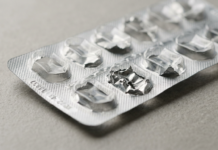
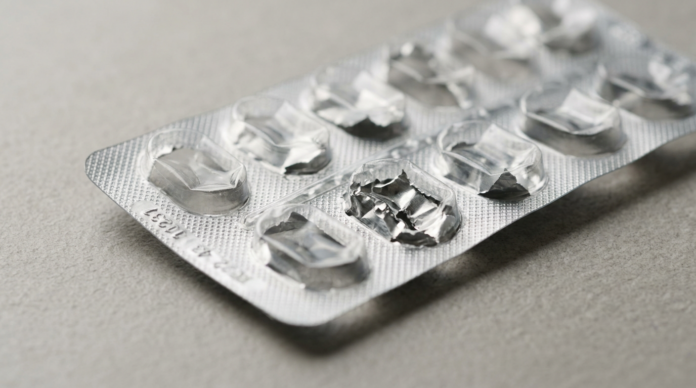
Once the paper components are directed into their circular loop, consumer attention turns to the core conundrum of modern healthcare packaging: the empty blister pack. Blister packs are marvels of food and drug engineering, explicitly designed to protect sensitive chemical compounds from moisture, oxygen, light, and physical degradation. They generally feature a thermoformed plastic cavity sheet made from polyvinyl chloride, polypropylene, or high-barrier polychlorotrifluoroethylene, heat-sealed to a thin aluminum lidding foil through which the patient pushes the pill. Because these materials are laminated together, consumers often assume that empty blister packs must be discarded into the non-recyclable residual waste bin as an inseparable composite. However, in contemporary waste sorting paradigms, this assumption is often incorrect.
In Italy, through the national packaging consortia framework represented by organizations like CONAI and COREPLA, sorting rules are anchored in the legal definition of packaging rather than absolute material homogeneity. If an empty blister pack was designed to contain, protect, and handle a domestic consumer product, it is legally recognized as packaging. Advanced automated recycling sorting centers utilize optical near-infrared sorters, magnetic separators, and eddy-current separators capable of recognizing these materials and segregating them for energetic recovery or specific material recovery streams where aluminum and plastic can be thermally delaminated or routed into specialized processing. Therefore, in the vast majority of Italian municipalities, a completely empty plastic-and-aluminum blister pack goes into the plastic packaging bin or the multi-material bin together with metals, depending on whether local sorting pairs plastic with aluminum and tinplate.

There is an absolute, non-negotiable caveat to this packaging rule: the blister pack must be entirely empty. If even a single expired capsule remains trapped inside a foil bubble, the entire blister pack forfeits its packaging status and instantly becomes hazardous pharmaceutical waste. Discarding a blister with residual pills into the plastic recycling bin contaminates the recycling line and creates chemical exposure risks for mechanical sorting plant operators. When a blister pack still holds expired or unwanted pills that you cannot pop out, the entire item must be deposited directly into the dedicated expired medicine bin at the pharmacy. Conversely, if you can easily push the expired pills out through the foil, you should deposit the loose pills into the pharmacy container and drop the now-empty blister into the appropriate plastic or multi-material packaging stream.
Other medication formats introduce distinct structural nuances that require careful handling. Consider liquid remedies like syrups, cough elixirs, antibiotic suspensions, and liquid drops, which usually arrive in small amber glass bottles or rigid high-density plastic containers. When these liquids expire, you should never rinse the residual pharmaceutical syrup down your kitchen sink to clean the bottle for recycling. Emptying an antibiotic suspension into the drain concentrates pharmacological toxins directly in domestic greywater. Instead, keep the remaining liquid securely sealed inside its original bottle, remove any clean outer cardboard packaging, and deposit the sealed bottle directly into the pharmacy expired medicine bin, where it can be handled safely without environmental dispersion.
Topical medications packaged in malleable aluminum tubes, such as cortisone creams, burn gels, and antibacterial ointments, present another unique challenge. If the tube is completely depleted and dry, it can be gently rolled up and placed into the metal collection bin, as aluminum possesses infinite recyclability without losing its structural properties. However, if the tube still contains significant amounts of active, oily cream that cannot be squeezed out, discarding it into the metal recycling stream causes major contamination during re-melting and can interfere with sorting sensors. In that situation, the half-full tube must be consigned to the pharmacy collection container along with other unexhausted formulations.
It is equally vital to distinguish domestic medicines from biohazardous sharps and medical diagnostic devices, which are frequently found in the exact same medicine cabinet. Syringes with needles, disposable lancets used for blood glucose monitoring, insulin pen needles, and surgical scalpel blades must never, under any circumstances, be tossed into domestic plastic or metal recycling bins, nor into standard pharmacy medicine boxes. These items present immediate biological contamination risks and severe puncture hazards for sanitation workers. They must be placed in puncture-resistant medical sharps containers and disposed of through dedicated municipal collection centers or specialized hazardous waste programs coordinated by local health authorities.
Equally confusing are over-the-counter medical devices and modern testing supplies that have proliferated in recent years, such as rapid antigen test cassettes, plastic pregnancy tests, digital thermometers, and disposable ice packs. Despite containing plastic or electronic parts, used rapid diagnostic tests represent sanitary waste and must be placed strictly in the non-recyclable residual bin. Digital thermometers, containing microchips and button batteries, qualify as Waste Electrical and Electronic Equipment, which must be taken to municipal civic collection centers rather than dropped into pharmaceutical receptacles. Mercury thermometers, relics of older generations, constitute an exceptionally hazardous toxic waste stream and require specialized municipal hazardous waste drop-off.
One of the most persistent hurdles for citizens striving for ecological excellence is that municipal waste management guidelines vary considerably across geographical boundaries. While European environmental directives set comprehensive overarching targets, regional authorities and local waste management companies maintain operational autonomy over how collection streams are configured. In some territories, plastics and metals are collected in a unified yellow bin; in others, metals join glass in a dedicated green or blue receptacle; and in certain areas, specific packaging formats like composite blister packs are routed through customized sorting lines. What is considered standard plastic packaging protocol in one city might be regulated as dry unsorted waste in a neighboring province.
Navigating these granular territorial shifts is especially challenging when traveling, moving homes, or managing properties in different regions. Fortunately, digital ecological intelligence has evolved to bridge this informational gap effortlessly. To resolve any lingering doubt regarding your specific municipality, the SmartRicicla app serves as an indispensable daily ally. Because waste sorting regulations change from one municipal administration to another, SmartRicicla uses geolocation to instantly identify your exact location, providing updated disposal calendars, sorting criteria, and dedicated waste categories for every single material. By putting comprehensive local environmental guidelines into your pocket at zero cost, it eliminates guesswork and ensures that every discarded item finds its proper circular destination.
Embracing a meticulous approach to pharmaceutical waste disposal ultimately prompts a broader reflection on sustainable health consumption and waste prevention. Reducing waste begins long before sorting time, starting in the pharmacy aisle through conscious purchasing, requesting smaller packaging formats when temporary treatments are prescribed, and storing medications under optimal temperature and humidity conditions to prevent premature spoilage. By pairing rational medicine cabinet management with precise, knowledgeable waste separation, every household can protect drinking water reserves, safeguard aquatic biodiversity, and ensure that our collective journey toward a circular economy remains healthy, clean, and uncompromised.