



















Every autumn, the European Union pauses to celebrate an agricultural model that is quietly yet profoundly reshaping the continent’s landscapes, food traditions, and ecological health. Officially signed into existence in 2021 by the European Parliament, the European Commission, and the Council of the European Union, EU Organic Day marks a historic institutional recognition that sustainable agriculture is not a niche luxury, but a cornerstone of human and planetary survival. Set on the calendar as a pivotal benchmark within the European Green Deal and the Farm to Fork Strategy, this observance serves as both a vibrant celebration of organic pioneers and an urgent summons to transform the very architecture of our modern food systems.
For decades, conventional agriculture has operated under an industrial paradigm dominated by synthetic inputs, relentless intensification, and monoculture yields that prioritized short-term volume over long-term vitality. The systemic costs of this extractive model have become impossible to ignore: catastrophic declines in insect populations, depleted groundwater reservoirs, degraded soils stripped of organic matter, and an alarming vulnerability to accelerating climate disruptions. In sharp contrast, organic farming represents a philosophy rooted in collaboration with nature rather than its subjugation. EU Organic Day reminds us that this paradigm shift is not a romantic retreat into the past, but an advanced ecological science that combines ancestral agrarian wisdom with cutting-edge agroecological research to build genuine agricultural resilience.
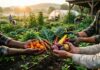
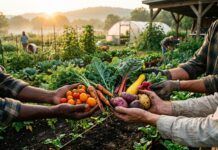
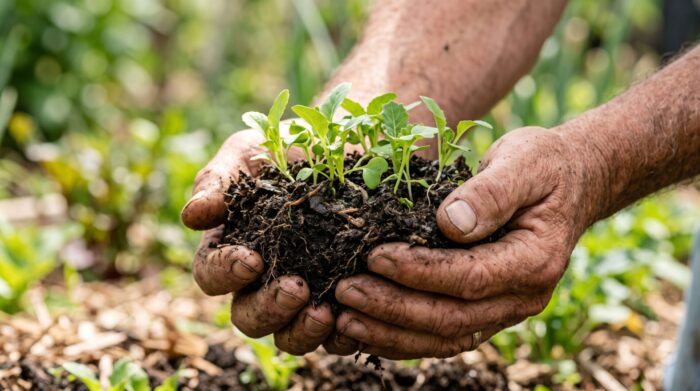
At the beating heart of the organic philosophy lies a profound commitment to the health of the soil. Rather than treating farmland as an inert medium that merely holds plant roots while synthetic fertilizers deliver artificial sustenance, organic growers view the soil as a living, dynamic ecosystem. A single teaspoon of healthy, organic topsoil contains billions of beneficial bacteria, miles of microscopic mycorrhizal fungi, and countless protozoa and nematodes working in intricate biological harmony. By eschewing synthetic chemical pesticides, petroleum-based nitrogen fertilizers, and toxic herbicides, organic practices allow these underground communities to thrive. Healthy soil biology breaks down organic matter, transforms mineral compounds into bioavailable nutrients, and naturally fortifies crops against disease, resulting in food that is inherently nutrient-dense and chemically unburdened.
Moreover, living organic soils are among the planet’s most powerful, cost-effective allies in the ongoing fight against climate breakdown. The widespread implementation of cover crops, extended crop rotations, agroforestry, and generous applications of organic compost fundamentally alters the carbon balance of agricultural land. Instead of releasing massive quantities of greenhouse gases through synthetic fertilizer manufacturing and excessive tillage, organic farmlands actively capture atmospheric carbon dioxide and sequester it deep within the soil profile as stable humus. This subterranean carbon sponge not only mitigates global emissions but also dramatically improves soil structure, enabling fields to absorb torrential rains like a sponge during flash floods and retain vital moisture throughout punishing summer droughts.
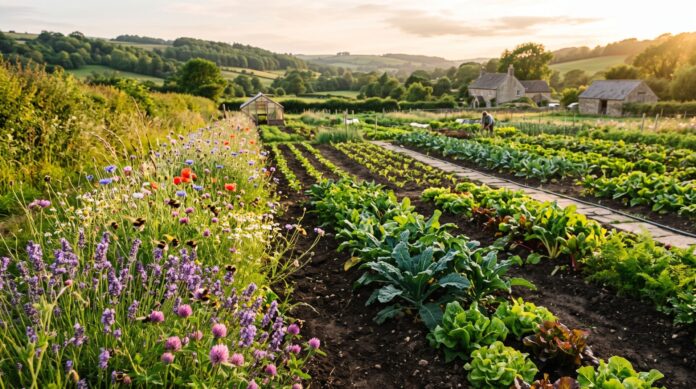
The ecological dividends of organic farming extend far beyond the soil horizon to breathe life back into Europe’s beleaguered biodiversity. Scientific assessments consistently demonstrate that organically managed farmlands harbor up to thirty percent more species and fifty percent higher densities of flora and fauna compared to their conventional counterparts. Wild bees, hoverflies, butterflies, and other essential pollinators find safe haven in organic fields, which are naturally bordered by native hedgerows, multi-species wildflower buffer strips, and unmanaged habitat patches. Farmland birds, amphibians, and beneficial predatory insects return in flourishing numbers, naturally balancing pest pressures and restoring the delicate ecological food webs that industrial monocultures have fractured across vast swaths of the European countryside.
EU Organic Day also casts a bright spotlight on the intimate connection between organic agriculture and the principles of the circular economy. Conventional farming is overwhelmingly linear: fossil-fuel-intensive synthetic inputs are manufactured off-site, applied to fields, and frequently lost downstream as harmful agricultural runoff that triggers eutrophication in rivers, lakes, and coastal waters. Organic farming, by its very design, embodies closed-loop, regenerative systems. Nutrients are cycled meticulously within local ecosystems through on-farm composting of crop residues, responsible livestock manure integration, and the systematic use of nitrogen-fixing legume crops such as clover, alfalfa, and beans. Waste ceases to exist as a concept; instead, every biological byproduct becomes a valuable resource that rejuvenates the land for future harvesting cycles.
This closed-loop mindset extends to animal welfare, which forms an inseparable tenet of organic regulations across the European Union. In certified organic systems, livestock are not treated as industrial commodities confined to high-density feedlots, but as sentient beings whose natural behaviors must be respected and accommodated. Animals are granted meaningful access to open pastures, free-range environments, and natural sunlight, while their diets must consist of non-genetically modified, organic feed sourced predominantly from the farm itself or local regional producers. The routine prophylactic use of synthetic antibiotics and chemical growth promoters is strictly prohibited, dramatically curtailing one of the most pressing global public health crises of our era: the proliferation of antimicrobial-resistant pathogens.
As Europe reflects on the milestones of EU Organic Day, the progress achieved under the EU Action Plan for the Development of Organic Production is both tangible and inspiring. Across the European Union, the total area of agricultural land dedicated to organic farming has steadily climbed, surpassing seventeen million hectares and accounting for over ten percent of the bloc’s total utilized agricultural area. Countries like Austria, Estonia, and Sweden have blazed visionary trails, with organic land shares exceeding twenty or even thirty percent of their national agricultural zones. Major agricultural engines such as Italy, France, and Spain manage millions of certified organic hectares, proving unequivocally that ecological stewardship can flourish at commercial scale across diverse microclimates, terrains, and culinary traditions.
Yet, achieving the European Green Deal’s ambitious target of converting twenty-five percent of the continent’s total agricultural land to organic practices by 2030 requires overcoming significant economic and structural headwinds. In recent years, inflationary pressures, geopolitical instability, and soaring energy costs have squeezed household budgets, temporarily cooling consumer spending on organic items in several key markets. This economic friction has highlighted an ongoing structural vulnerability: the burden of funding ecological transition cannot be placed solely upon the shoulders of conscious consumers paying retail price premiums, nor can individual farmers be expected to absorb market volatility without robust, systemic support.
To guarantee that the organic transition continues to gather momentum, European policymakers, regional authorities, and civic leaders must align economic incentives with environmental realities. This requires channeling a more substantial proportion of the Common Agricultural Policy subsidies toward farmers who actively generate public ecological goods, such as clean water, carbon storage, and biodiversity preservation. Furthermore, public procurement policies represent a transformative lever of change. When municipalities, schools, healthcare systems, and public institutions mandate minimum quotas of locally sourced, certified organic food in their cafeterias and canteens, they establish stable, guaranteed markets that empower local family farms to transition with confidence while democratizing access to nutritious, non-toxic food for all socio-economic strata.
Technological and social innovation also plays an increasingly vital role in expanding the reach of agroecology. Modern organic agriculture is far from primitive; it is an intensely knowledge-based craft that leverages precision agricultural tools, robotic mechanical weeders, satellite-guided field mapping, and bio-acoustic sensors to manage fields efficiently without relying on synthetic chemicals. Concurrently, social innovations like Community Supported Agriculture networks, short food supply chains, and transparent farm-to-table cooperatives are dismantling the opaque corporate intermediaries that have long alienated consumers from the provenance of their daily meals. These initiatives cultivate a culture of food citizenship, replacing passive consumption with an active relationship based on trust, fair farmer compensation, and shared environmental responsibility.
Ultimately, EU Organic Day is much more than a routine entry on the European environmental calendar; it is a profound declaration of intent. It celebrates the tireless courage of organic farmers who wake before dawn to care for the land with patience and profound scientific humility. It invites every citizen to realize that three times a day, every forkful of food is an intentional political act that casts a vote for the type of planet we choose to inhabit. By choosing organic, we vote for vibrant, living soils that store water and carbon; we vote for skies alive with the hum of pollinators and the songs of farmland birds; we vote for rural communities rooted in economic dignity and circular harmony. As Europe charts its path toward climate neutrality and social renewal, the principles enshrined in EU Organic Day provide an enduring, luminous blueprint for a sustainable and regenerative tomorrow.