






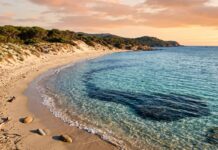












The Mediterranean Sea, the cradle of countless millennial civilizations and a strategic crossroads of cultural and economic exchange, is today at the center of an ecological transformation of historical and undocumented proportions, taking on the unenviable role of a true hotspot for global climate change. Recent and continuous measurements conducted by the National Research Council (CNR) and a dense network of international oceanographic institutes paint a picture of accelerated warming that leaves no room for optimistic interpretations, unequivocally demonstrating that our closed basin is heating up at a rate over twenty percent faster than the global average of open oceans. This thermal anomaly, manifesting in surface temperatures that during the prolonged summer months now regularly exceed historical averages by several degrees Celsius, is not a mere statistical datapoint destined for climatological archives, but the tangible symptom of a deep fever that is radically altering the chemistry, thermodynamics, and entire biology of our coastal and pelagic waters. The semi-closed basin nature of the Mediterranean, which communicates with the Atlantic Ocean only through the narrow funnel of the Strait of Gibraltar, makes it intrinsically vulnerable to heat accumulation, since a complete water exchange takes almost a century, effectively trapping excess thermal energy and preventing the natural dissipation that occurs in more open and deeper oceans.
The most devastating phenomenon arising from this energy imbalance is represented by so-called “marine heatwaves” (MHWs), prolonged periods lasting from several weeks to entire months in which water temperatures experience extreme anomalous peaks. These heatwaves do not merely warm the thin surface film of the sea, where bathers and tourists perceive the water as broth, but penetrate inexorably down the water column, reaching mesopelagic depths and disrupting benthic ecosystems that for tens of thousands of years had evolved and adapted to extremely stable, cold, and predictable thermal conditions. The thermal stratification that is created acts as an invisible but impenetrable wall, preventing the mixing of deep, nutrient-rich waters with sunlit surface waters, causing a drastic collapse in the primary productivity of phytoplankton, which forms the irreplaceable base of the entire marine food chain.
The most visible, dramatic, and widely discussed impact of this ecological upheaval is the so-called meridionalization and subsequent tropicalization of the Mediterranean basin. Aided by the widening of the Suez Canal, an ever-growing number of thermophilic species originating from the Red Sea and the Indian Ocean—the so-called alien or Lessepsian species—are initially colonizing the eastern basin, and then pushing westward and northward with impressive speed, finding in our waters, once too cold and inhospitable for their winter survival, thermal conditions perfectly suited for their uncontrolled proliferation. We are not talking about sporadic presences, but true biological invasions that include voracious predatory fish like the lionfish (Pterois miles) or extremely competitive herbivorous fish like the rabbitfish, but also invertebrates with extraordinary adaptability like the infamous blue crab (Callinectes sapidus), originally from the American Atlantic coasts, which has found an ideal habitat in warm lagoons, estuaries, and river mouths in Italy. These new species, finding themselves in an environment totally devoid of their natural predators and pathogens that would limit their expansion in their native seas, compete extremely aggressively with native fish fauna for food resources and spatial refuges, irremediably and perhaps permanently altering local trophic networks.
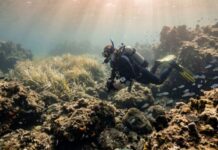
This biological upheaval does not remain confined to marine biology textbooks but spills over with devastating violence onto local coastal economies, decimating populations of mollusks, crustaceans, and small pelagic fish traditionally fundamental for the livelihood of small-scale artisanal and commercial fishing. Local fishing fleets, which for generations have handed down knowledge linked to the seasonal cycles of Mediterranean species, are suffering an unprecedented economic backlash: fishermen increasingly find their nets clogged with alien species totally devoid of commercial value on traditional fish markets, or, worse still, find their expensive fishing gear irreparably cut and damaged by the powerful claws of the new invasive crustaceans, while traditional target species, such as sea bream, sea bass, or red mullet, migrate to more northern latitudes or sink to bathymetric depths inaccessible to small coastal fishing in a desperate attempt to find cooler waters. The crisis of the Mediterranean, however, does not end with biological invasion and the economic losses of the fishing sector; it touches the very heart of its ecological architecture, hitting hard at those fundamental organisms that act as ecosystem engineers, first and foremost Posidonia oceanica. These immense underwater meadows, endemic and unique to our sea, act as a true blue lung, producing enormous quantities of oxygen and, even more crucially in the era of climate change, storing colossal volumes of carbon dioxide in their intricate and ancient systems of underground rhizomes, with carbon sequestration rates that even exceed those of terrestrial rainforests.

Prolonged thermal stress and summer heatwaves lead to the rapid deterioration of Posidonia beds, reducing their density, hindering their slow reproduction, and inhibiting their vital capacity. This die-off triggers a catastrophic vicious cycle: with the disappearance of the meadows, not only is a formidable carbon sink lost (which ends up being released back into the environment), but the irreplaceable mechanical function of Posidonia leaves, which dampen wave energy protecting the coasts, and of the so-called “banquettes,” the accumulations of dead leaves that defend beaches from erosion in winter, also fails. The destruction of these habitats therefore dramatically accelerates coastal erosion, an existential threat to the Italian tourism industry and to the safety of coastal infrastructures, already heavily compromised by the eustatic sea-level rise caused by the melting of polar glaciers.
Added to this already severe symptom picture is the insidious phenomenon of water acidification, the “evil twin” of global warming. By absorbing ever-greater quotas of anthropogenic carbon dioxide from the atmosphere year after year, seawater undergoes a chemical variation that lowers its pH, altering the saturation state of aragonite and calcite, making it biochemically and energetically exhausting for corals, mollusks, crustaceans, and countless planktonic organisms to build and maintain their calcareous shells and skeletons. Extremely slow-growing bioconstructor organisms such as red and yellow gorgonians, which form the spectacular and highly colorful “animal forests” of coralligenous seabeds, are undergoing literally terrifying mass mortality events. These mortality events strike entire submerged rock faces, where the anomalous temperature rise weakens the organisms’ immune defenses, paving the way for opportunistic bacterial pathogens that lead to rapid tissue necrosis, transforming once-lush underwater landscapes vibrating with biodiversity into ghostly expanses of lifeless calcareous skeletons. Emblematic is the tragedy of the Pinna nobilis, the largest bivalve in the Mediterranean, whose population has been decimated almost to the point of extinction in just a few years due to the fatal synergy between unusually warm waters and the spread of a lethal parasite.
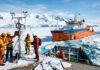
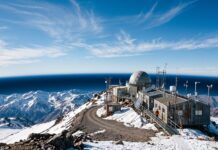
Faced with this scientific scenario that is an understatement to call dramatic, research assumes a central and irreplaceable role, definitively shedding the guise of pure and detached academic speculation to transform into a primary tool for ecological and socio-economic survival. CNR researchers, in synergy with zoological stations, university networks, and European space programs like Copernicus, are implementing increasingly sophisticated, widespread, and interconnected marine monitoring systems. Fleets of autonomous underwater drones (gliders) are used to patrol the depths for months collecting data continuously, offshore oceanographic buoys equipped with advanced sensors, and predictive oceanographic models based on artificial intelligence and machine learning, capable of mapping thermal currents and predicting the onset of environmental stress with surgical precision. This immense and continuous volume of real-time data is fundamental for guiding local adaptation and active mitigation decision-making policies. The most effective protection strategy, unanimously advocated by the international scientific community, lies in the rapid establishment, expansion, and above all, rigorous and real management of an interconnected network of Marine Protected Areas (MPAs), with the goal of fully protecting at least thirty percent of our seas within the next decade. Severely and scientifically limiting multiple local anthropogenic impacts—such as chemical and noise pollution, inadequately treated urban wastewater, uncontrolled anchoring, intensive maritime traffic, and destructive fishing practices like illegal bottom trawling—within these refuge oases allows marine ecosystems to maintain and regenerate greater “resilience,” meaning that natural and intrinsic ability to withstand global thermal shocks, adapt to changes, and recover more quickly after an extreme climate event.
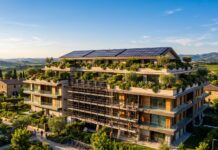
However, local protection and habitat conservation, while noble, essential, and no longer postponable actions, cannot in any way represent humanity’s only response. The spreading fever of the Mediterranean Sea is merely the most acute and evident local symptom of a systemic and planetary pathology, and the only true cure capable of stopping this ecological hemorrhage lies in a drastic, immediate, irreversible, and courageous reduction of global greenhouse gas emissions. Addressing this immense challenge requires a radical paradigm shift that is not only technological but profoundly economic, political, and cultural; it requires a just energy transition that is not limited to being an empty electoral slogan, but translates into a structural reorganization of our society towards the definitive abandonment of fossil fuels in favor of clean and renewable sources. The fate of the Mediterranean Sea, our mare nostrum, is inextricably and tragically linked to our fate as a species: saving its extraordinary biodiversity does not only and romantically mean protecting nature for its inestimable intrinsic value, but it means in much more pragmatic terms guaranteeing food security, climate stability, economic prosperity, and the cultural identity of the countless and fragile communities that have bordered its shores for millennia, transforming this unprecedented environmental crisis into a unique opportunity to harmoniously and lastingly redefine our vital relationship with the entire blue planet.