




























In an era where urban centers face the intertwined challenges of climate disruption, stubborn atmospheric pollution, and gridlocked transit corridors, a compelling empirical investigation has provided decisive evidence on how the modern workplace can spearhead ecological recovery. A collaborative investigation spearheaded by the Italian National Agency for New Technologies, Energy and Sustainable Economic Development, widely known as ENEA, alongside the economic intelligence of the Bank of Italy, reveals that remote working arrangements possess the remarkable power to curtail greenhouse gas emissions associated with professional commuting by up to 75 percent. This finding transforms what was once considered an emergency operational compromise into one of the most effective, accessible, and immediately deployable decarbonization levers available to industrialized economies.
For decades, conventional socioeconomic structures operated under the rigid dogma of physical presenteeism. Millions of professionals were expected to embark simultaneously on synchronized cross-city migrations twice a day, overwhelming municipal infrastructure, saturating urban arteries with exhaust gases, and consuming astronomical volumes of fossil fuels. The collaborative assessment conducted by ENEA and the central bank scrutinized the thermodynamic, logistical, and behavioral variables that govern modern travel behavior. By tracking empirical data on travel distances, modal transport choices, vehicle occupancy rates, and subsequent tailpipe discharges, the research consortium quantified the direct ecological dividend that arises whenever an employee trades a daily commute for a digital connection.
The staggering figure of a 75 percent reduction in carbon dioxide discharges stems directly from the disproportionate role played by private automotive vehicles in regular professional journeys. In many metropolitan territories, individual car ownership remains the dominant mode of travel, frequently characterized by low vehicle occupancy rates where a single driver occupies a multi-ton combustion machine. Eliminating these repetitive trips does not merely produce a linear saving in fuel consumption; it dismantles the systemic peak-hour bottlenecks that force combustion engines to run in inefficient, stop-and-go patterns, where tailpipe pollutants and carbon intensity escalate dramatically.
Beyond the baseline reductions in carbon dioxide, the collateral atmospheric advantages highlighted by environmental researchers are vast. Urban commuting represents a primary driver of localized toxic air contaminants, including nitrogen oxides, hazardous volatile organic compounds, and dangerous particulate fractions such as PM2.5 and PM10. These microscopic aerosols, released not only through combustion exhausts but also via tire degradation and brake wear, inflict severe harm on cardiovascular and respiratory health. When agile work protocols diminish urban vehicle throughput, surrounding city air sheds experience an immediate drop in toxic burdens, generating quantifiable public health savings that alleviate national healthcare expenditures.
A critical dimension of the joint study revolves around the rigorous evaluation of rebound energy expenditures. Skeptics of teleworking have frequently argued that avoiding the office merely shifts the environmental ledger into private residences, where decentralized domestic heating, ventilation, and power consumption might neutralize or even outpace corporate energy savings. The ENEA and Bank of Italy researchers tackled this question with meticulous thermodynamic modeling, demonstrating that while domestic residential energy consumption does register modest increments during teleworking hours, the sheer magnitude of energy saved from avoided vehicular transportation overwhelmingly tips the balance toward net sustainability.
The physical realities of modern mobility explain this dramatic delta. Moving a human being weighing seventy kilograms across ten or twenty kilometers within a conventional passenger vehicle requires the expenditure of immense amounts of chemical energy, the vast majority of which is lost as heat. By comparison, operating a laptop, maintaining home ambient lighting, and moderately regulating residential thermal comfort demands a negligible fraction of kilowatt-hours. Consequently, even in seasonal periods requiring residential climate control, the net energetic balance remains remarkably favorable, cementing remote work as a decisively resource-efficient mechanism.
From the perspective of macroeconomic resilience, the input provided by the Bank of Italy injects indispensable strategic depth into the environmental discussion. Modern nations that remain heavily dependent on imported hydrocarbons face continuous exposure to global commodity volatility and balance-of-payments vulnerabilities. By systematically curtailing non-essential transportation demand across vast swathes of the tertiary sector, national economies can systematically suppress domestic fuel consumption. This reduction fortifies domestic energy sovereignty, stabilizes household budgets against sudden inflationary swings in pump prices, and aligns structural monetary interests with the ecological imperative of the European Green Deal.
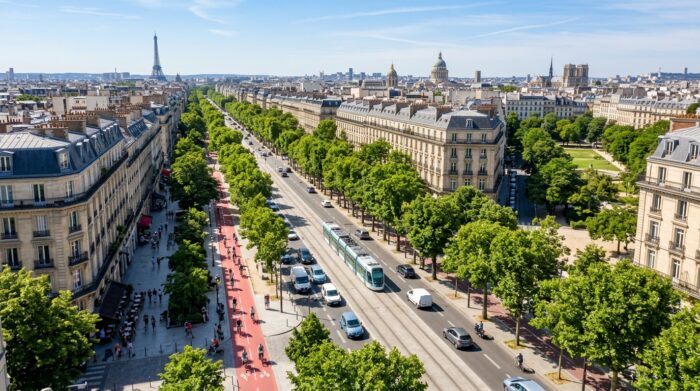
Furthermore, the systemic recalibration of work arrangements holds radical potential for the revitalization of urban geography. For generations, urban sprawl was sustained by the unidirectional flow of workers commuting from peripheral dormitory communities into high-density commercial centers. This pattern fostered severe economic disparities, depleting neighborhood vitality in residential suburbs while subjecting historic urban centers to unsustainable commercial saturation and housing price inflation. With agile working firmly integrated into the socioeconomic tapestry, decentralized residential districts are rediscovering their local retail ecosystems, community bonds, and cultural vibrancy, giving real momentum to the visionary concept of the fifteen-minute city.
The social dimensions of this transition are equally profound, illustrating that environmental sustainability and human well-being are inseparable components of genuine progress. Commuting has long been recognized by occupational psychologists as one of the single most stressful and unproductive intervals of the human day. By returning hours of wasted transit time to individuals, smart working enhances work-life reconciliation, empowers families to balance domestic and professional obligations, and mitigates the chronic exhaustion associated with crowded peak-hour transit. Happy, well-rested employees operating in flexible environments demonstrate higher cognitive engagement and creativity, disproving the outdated misconception that physical oversight is a prerequisite for workplace productivity.
Corporate leaders and organizational planners must recognize that remote work constitutes an indispensable foundation for progressive Corporate Social Responsibility and ambitious Environmental, Social, and Governance benchmarks. Traditionally, companies seeking to minimize their carbon footprints focused primarily on direct Scope 1 facility emissions and indirect Scope 2 electricity sourcing. However, under increasingly stringent international disclosure standards, Scope 3 supply chain and indirect commuter emissions have taken center stage. Organizations that structure hybrid policies intelligently can instantaneously slash their Scope 3 reporting values, rendering them far more attractive to ethical capital markets and green investment portfolios.
Nevertheless, the report implicitly acknowledges that maximizing these ecological windfalls requires purposeful urban policy and corporate stewardship. A chaotic or unplanned retreat from workplaces could lead to fragmented municipal systems or disincentivize long-term investments in clean public transportation networks. Municipal administrations must harmonize teleworking frameworks with renewed urban mobility plans, ensuring that the reduction in private vehicular traffic opens up precious public space for dedicated active mobility arteries, pedestrian corridors, and biodiverse urban green spaces capable of acting as microclimate buffers against urban heat island effects.
At the same time, commercial real estate developers must heed the unmistakable signals emerging from this research. The days of monolithic, resource-intensive office towers dedicated exclusively to dense rows of individual cubicles are drawing to a definitive close. Forward-looking real estate portfolios are already pivoting toward energy-positive, collaborative hubs designed for intentional team gatherings, innovation sprints, and relational building. When organizations streamline their square footage requirements, the overall building sector—one of the largest contributors to global carbon emissions—benefits from reduced material fabrication, diminished operational energy demands, and lower life-cycle maintenance costs.
The findings presented by ENEA and the Bank of Italy should serve as a wake-up call to corporate entities that have recently contemplated unilateral return-to-office mandates. Enforcing arbitrary physical attendance rules without objective operational necessity directly counteracts climate mitigation efforts and imposes unnecessary logistical stress on workers and urban ecosystems alike. Instead of retreating into obsolete habits of the twentieth century, enterprise management should lean into sophisticated hybrid configurations, optimizing schedules so that collaborative in-person interactions occur purposefully rather than reflexively.
Digital infrastructure providers also bear an important responsibility in this evolutionary phase. The successful continuation of teleworking hinges upon high-capacity, low-latency, and energy-efficient telecommunication architectures. Fiber-optic deployments, distributed cloud computing centers powered by localized renewable energy arrays, and resilient domestic connectivity networks are foundational utilities that enable millions of citizens to bypass physical roadways entirely. Investing in digital connectivity is fundamentally an investment in environmental preservation, yielding emissions cuts that dwarf the power demands of the digital networks themselves.
In summary, the rigorous empirical inquiry delivered by ENEA and the Bank of Italy elevates remote working from a convenient professional perk to a cornerstone of national environmental strategy. By demonstrating that three-quarters of individual commuter emissions vanish when employees are liberated from daily transit imperatives, the research presents a path forward that harmonizes economic stability, individual welfare, and planetary stewardship. Embracing this workplace revolution with strategic foresight and supportive public policies will allow modern societies to build resilient, clean, and vibrant communities capable of flourishing throughout the twenty-first century.
Fonte: ENEA