

























Late March and early April mark a moment of profound renewal, not only for awakening nature but also for our homes. The spring equinox brings with it a new energy that traditionally flows into the famous “spring cleaning,” a rite of passage that pushes us to empty closets, tidy up cellars, and prepare balconies for blooming. Added to this domestic fervor is the imminence of Easter, a holiday that, from a consumption perspective, translates into an authentic invasion of complex packaging, brightly colored papers, and plastics of every shape and color.
At this precise time of the year, the composition of our waste bin undergoes a drastic mutation. Waste management companies record anomalous peaks of incorrect sorting, the result of confusion when faced with multi-material packaging or the rush to get rid of the superfluous items accumulated over the winter. And yet, precisely in these moments of high volume, the precision of the individual citizen becomes the tipping point between an ecological disaster (and an immense cost for the community) and the success of the circular economy.
In this special edition of our Where do I throw it (Dove lo butto) section, we will x-ray the typical waste of this season. Together, we will discover how to decode the wrapper of an Easter egg, how to manage the mountain of textiles from the seasonal wardrobe change, and how to return to the earth what belongs to the earth, debunking false beliefs and transforming our spring cleaning into an act of pure applied ecology.
The Easter Dilemma: The Anatomy of a Chocolate Egg
Let’s start with the undisputed symbol of these weeks: the Easter egg. This delicious cocoa concentrate is, from a packaging point of view, a true masterpiece of engineering complexity (and often a nightmare for recycling). Let’s dismantle an egg piece by piece to understand where each of its components should end up.
The outer wrapper, the large, colorful, and shiny one, is the element that generates the most confusion. Often it looks like aluminum, sometimes it looks like paper, but in the vast majority of cases (over 80% on the market) it is a plastic polymer, specifically polypropylene. There is a foolproof trick to find out: the “crumple test.” If you crumple the wrapper in your hand and it tends to open up and return to its original shape, it’s plastic and goes in the plastic recycling bin. If, on the contrary, the wrapper remains perfectly crumpled, maintaining the shape of a ball, we are dealing with a sheet of pure aluminum. In this fortunate case, the foil should be thrown in the metals bin. It is fundamental to remember that precious and infinitely recyclable metals like aluminum and classic cans belong to the metals category and must follow their virtuous path towards the foundries, separated from plastic and glass.
The ribbon or bow that closes the egg? It is almost always made of synthetic fabric or non-recyclable plastic (polyamide): its inevitable destiny is the unsorted dry waste bin (unless you are creative enough to reuse it for gift wrapping).
Let’s move inside. The “surprise” is traditionally enclosed in a rigid plastic capsule. Surprisingly, many make the mistake of considering it packaging, but according to Italian regulations, it often isn’t: if it’s a generic container that doesn’t protect a food item, technically it should go in the unsorted waste. However, many recycling consortiums today accept it in plastic if cleaned. The true golden rule here is reuse: those small containers are perfect for storing buttons, screws, or for children’s crafts. The resting base of the egg, that plastic “little cup” that holds it upright, is instead a packaging in all respects and always goes in the plastic collection.
And the Colomba (traditional Easter dove cake)? The outer cardboard box goes in the paper bin. But pay attention to the transparent inner bag in which the cake is wrapped: usually, it’s plastic (to be thrown in the appropriate bin), but in recent years some virtuous companies are using compostable bags made of Mater-Bi. If you find the compostability logo, that bag is organic material and must end up directly in the organic waste (umido), together with food scraps.

Spring Decluttering, Chapter 1: Textile Waste
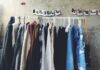
With the arrival of the first warm days, closets are opened for the dreaded “season change.” It’s the moment when we realize how many garments we no longer wear, how many are worn out, or simply out of fashion. The decluttering fever (getting rid of the superfluous) is an excellent psychological practice, but if managed poorly it turns into an environmental tragedy.
The fashion industry, particularly “fast fashion,” is the second most polluting industry on the planet. The clothes we throw away too lightly often end up in unsorted dry waste, being incinerated or crammed into landfills where they release microplastics (if they contain polyester or nylon) and toxic dyes into the soil for centuries. Since 2022 in Italy (and soon throughout Europe), the separate collection of textile waste has become mandatory.
Clothes must never, under any circumstances, be thrown into the unsorted waste. If a garment is still in good condition, the first rule of the circular economy dictates reuse: donate it to charities, organize swap parties with friends, or sell it on the countless second-hand apps. If, on the other hand, t-shirts, trousers, socks (even mismatched), or old sheets are irreparably torn, stained, or worn out, they must be disposed of in the special yellow street bins for used clothes collection, or taken to the ecological island (recycling center). From there, they will be sent to specialized industrial hubs (like the textile excellence of Prato) where they will be shredded, sanitized, and transformed into new fibers, regenerated yarns, or used as thermal-acoustic insulators for green building and the automotive industry.
The Awakening of the Garden: Clippings, Prunings, and the Organic Cycle
Spring calls out loudly to anyone lucky enough to own a garden, a vegetable patch, or a simple lush balcony. It’s time for pruning roses and fruit trees, sowing, and cleaning the lawn of winter dead leaves. This activity produces a monumental amount of green waste.
Foliage, branches, withered flowers, and cut grass are living matter. They must return to the earth to regenerate it. However, there is frequent confusion about how to manage these quantities. Small balcony scraps (a few dry leaves, withered flowers from the windowsill pot, the gardener’s coffee grounds) can safely be thrown into the classic domestic organic waste bin. There, along with food scraps, they will feed the large composting plants that will transform them into biomethane and natural fertilizer.
But when we talk about real outdoor “spring cleaning,” the volumes change. If you have bags full of cut grass or bundles of pruned branches, you absolutely cannot clog the street organic waste bin (which is often reserved solely for food scraps for weight and logistical reasons). This green waste (technically called “clippings and prunings”) must be taken to the Municipal Collection Center (Ecological Island), or, in many municipalities, they enjoy a door-to-door pickup service by reservation or with special green wheeled bins.
The noblest, most ecological, and zero-kilometer alternative, if you have space, is the creation of a domestic composter in a corner of your garden: your green waste, mixed with kitchen scraps, will become within a few months a dark, fragrant soil, rich in nutrients, ready to make your summer blooms explode without having to buy factory-produced chemical fertilizers.
Spring Decluttering, Chapter 2: Hidden Electronic Waste (WEEE)
When thoroughly cleaning desk drawers or garage shelves, archaeological finds of the digital age are brought to light: old stripped USB cables, phone chargers we haven’t owned since 2015, broken earphones, blown blenders, and limescale-encrusted irons.
This is the realm of WEEE (Waste Electrical and Electronic Equipment). Throwing these items into the black bag of unsorted waste is a true crime against the future of our country. As we have explained in the past, WEEE contains so-called “Rare Earths” and highly precious metals like gold, silver, lithium, cobalt, and copper. In Europe, we are very poor in natural mines, but our drawers are extremely rich in these “urban mines.”
During spring cleaning, gather all broken electronic devices into a box. If they are small appliances (smaller than 25 cm, like a mouse or a cable), you can take them for free to any large electronics store without any obligation to buy anything new (the so-called “One against Zero” rule). For bulkier items (old microwaves, vacuum cleaners), the main road remains the ecological island. Recovering these materials means not only preventing highly toxic substances and heavy metals from polluting aquifers, but it guarantees our industries the raw materials to build the solar panels and batteries of the future.
Technology to the Rescue: The SmartRicicla Ally
The quantity and variety of materials emerging from spring cleaning and Easter celebrations can make even the most convinced environmentalist waver. The rules change from city to city, and the anxiety of “wishcycling” (recycling hoping to do good, but polluting the supply chain) is always lurking.
In this Where do I throw it section, we will never tire of reminding you that modern technology offers us incredibly simple solutions to complex problems. It is precisely in these periods of “heavy traffic” of waste that an application like SmartRicicla reveals its full potential.
Just have your smartphone handy while dismantling the Colomba box or tidying up the garage. If you have an existential doubt about the destiny of the plastic net that contained the eggs, or the polystyrene found in the cellar, by entering your municipality of residence on SmartRicicla you will get the exact and certified answer in three seconds, directly on your screen. The app not only points you to the correct bin, but often provides you with the opening hours of your local ecological island, greatly facilitating the disposal of garden clippings or WEEE. It is a collective intelligence made available to the individual citizen to zero out disposal errors.
Conclusion: The Spring of Our Consumption
Spring cleaning and organizing Easter are moments of joy and domestic rebirth. But in 2026, we can no longer limit ourselves to cleaning the inside of our homes by simply moving the dirt outside, into the environment we all share.
A true spring cleaning must be systemic. Taking the time to separate the plastic wrapper from the chocolate egg, carefully sorting the organic waste from the dry, recognizing the precious aluminum of cans, and directing metals to their infinite cycle of melting, are not boring tasks. They are acts of care. They are the most concrete and effective way we have to demonstrate that we understand we live on a planet with finite resources. This year, let’s make sure our “season change” is not only in the closet but in our awareness. The circular economy needs our careful hands, right here and right now.