








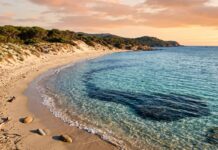














Sardinia is universally recognized by the international scientific and medical community as one of the planet’s exceptionally rare “Blue Zones.” It is a seemingly magical island where extreme longevity appears to be the standard rule rather than the statistical exception, and where a unique combination of traditional lifestyle, wholesome nutrition, and an incredibly preserved genetic heritage spanning millennia all work in profound synergy to create a population that is extraordinarily resilient to modern ailments. However, hidden right behind this idyllic, globally celebrated image of iron-clad health and spry centenarians lies a highly complex, harsh, and ruthless evolutionary history. For thousands of years, this beautiful island was one of the European territories most severely scourged by a microscopic yet devastatingly efficient enemy: the malaria parasite.
Today, an international team of leading geneticists, evolutionary biologists, and medical researchers from the National Research Council (CNR) has finally brought to light a remarkable biological secret that has been jealously guarded within the genetic code of the Sardinian people for generations. A massive, deeply analytical study has successfully identified a highly specific genetic variant, forged and refined in the crucible of centuries of relentless evolutionary selective pressure, which confers a natural and formidable resistance to malarial infection. This startling revelation represents a true watershed moment in modern genomic medicine. By meticulously decoding the complex defense mechanisms developed by nature over the course of millennia, science may finally possess the definitive, ultimate weapon required to completely eradicate a disease that, even now in the year 2026, continues to mercilessly claim hundreds of thousands of lives every single year, predominantly across the Global South.
Malaria in Sardinia: A Heavy Historical and Biological Heritage
To fully comprehend the revolutionary magnitude of the CNR’s recent genetic discovery, it is absolutely essential to take a step back in time and deeply immerse ourselves in the specific historical, geographical, and environmental context in which this remarkable genetic mutation first originated and subsequently thrived. Up until the middle of the twentieth century, malaria was not merely an endemic disease in Sardinia; it was arguably the single most defining demographic, social, and economic factor shaping the entire island’s destiny. Historical chronicles and ancient medical texts, dating all the way back to the Roman and Carthaginian eras, consistently describe the beautiful coastlines and the sprawling, marshy plains of Sardinia as profoundly deadly places, heavily infested by the Anopheles mosquito. This insect is the dreaded, highly efficient vector of the Plasmodium falciparum parasite, the specific etiological agent responsible for the most severe, neurologically damaging, and lethal form of malaria known to humanity.
This constant, pervasive, and deadly presence of the pathogen acted for countless human generations as a sheer evolutionary bottleneck of truly dramatic proportions. Translated into fundamental biological and Darwinian terms, malaria exerted a brutal, unforgiving selective pressure upon the island’s inhabitants: any individual who happened to possess genetic characteristics capable of counteracting, mitigating, or even partially surviving the parasitic infection had a statistically significantly higher probability of living through childhood, reaching reproductive age, and successfully passing these crucial “protective” genes on to their offspring. Conversely, those individuals who completely lacked these biological defenses tragically succumbed to the debilitating fevers, often at a very tender age. It is precisely within this intense, life-or-death Darwinian cauldron of survival that the Sardinian genome began to subtly mutate, adapting itself to a deeply hostile ecological environment through biological solutions of truly extraordinary ingenuity and complexity.
It was only thanks to the monumental, historically unprecedented eradication campaign conducted immediately following the end of the Second World War (the famous “Sardinian Project,” heavily supported by international entities including the Rockefeller Foundation), that the island was finally and permanently freed from the relentless scourge of the Anopheles mosquito. But while the buzzing insect and the acute disease have completely vanished from the modern Sardinian landscape, the invisible genetic scars, the complex biological adaptations, and the protective chromosomal modifications left behind by thousands of years of forced, deadly coexistence have remained indelibly and permanently imprinted within the fundamental DNA of the local population.
The CNR Investigation: Decoding the Isolated Island Genome
For decades, leading population geneticists have enthusiastically considered the island of Sardinia to be a veritable “open-air laboratory” for the advancement of human genetics and evolutionary biology. Largely due to its millennia-long geographical isolation in the middle of the Mediterranean Sea, compounded by profound cultural isolation and highly endogamous marriage practices in ancient times, the Sardinian population exhibits a level of genetic homogeneity and a remarkable preservation of archaic biological traits that remains completely unparalleled in any other modern European region.
Taking full advantage of these incredibly unique demographic and genetic characteristics, the dedicated researchers at the CNR initiated a massive, highly sophisticated Genome-Wide Association Study (GWAS). This cutting-edge computational technique allows scientists to meticulously scan the entire genome of thousands of participating individuals, actively searching for the most minute variations (known as single nucleotide polymorphisms, or SNPs) that can be statistically and biologically associated with specific physiological conditions, disease resistances, or phenotypic traits.
By carefully sampling thousands of willing volunteers drawn from vastly different geographical areas of the island—ranging from the coastal plains and historic marshlands that were once highly malarial, all the way up to the deeply isolated, mountainous inland villages where the mosquito vector historically struggled to spread—the CNR team was able to cross-reference an absolutely staggering volume of bioinformatic data. The resulting scientific conclusion was nothing short of astounding: the researchers successfully isolated an allelic variant, previously completely unassociated in a direct manner with malarial resistance, which was found to be significantly, undeniably overrepresented within the population of direct Sardinian descent. Crucially, this genetic marker was found in its highest concentrations specifically among families originating from the historic, notoriously swampy areas of the Campidano plain and the island’s western coastal regions, exactly where the selective pressure of the disease was historically the most intense.

The Mechanism of Action: How DNA Blocks the Deadly Parasite
But how, exactly, does this seemingly microscopic alteration in the vast human genetic code manage to so decisively defeat a parasite as famously aggressive, rapidly mutating, and biologically complex as Plasmodium falciparum? To truly understand this medical miracle, one must closely observe the intricate life cycle of the pathogen itself. When a female mosquito carrying the infection bites a human host, the parasites (currently in their sporozoite form) are injected directly into the bloodstream. They rapidly travel to the liver, where they silently multiply by the thousands, and subsequently burst back into the blood to aggressively invade and systematically destroy the host’s red blood cells (erythrocytes). It is precisely during this highly critical, explosive phase of cellular invasion that the devastating, universally recognized symptoms of malaria are unleashed: spiking, uncontrollable fevers, severe hemolytic anemia, catastrophic damage to internal organs, and, in the most severe neurological cases, coma and subsequent death.
The genetic variant newly discovered by the CNR team intervenes by subtly, yet perfectly and strategically, altering the delicate microscopic architecture of the red blood cell’s outer membrane, specifically modifying the highly specialized surface receptors that the Plasmodium parasite essentially uses as precise “locks” to penetrate the interior of the cell. In simple, functional terms, the mutated gene subtly reconfigures the surface proteins of the erythrocyte, effectively rendering it completely “invisible” or structurally inaccessible to the invading Plasmodium. The parasite, finding itself entirely unable to physically anchor to and forcefully invade the red blood cells in order to successfully reproduce, is left stranded and highly exposed in the bloodstream. This crucial delay gives the human host’s natural immune system the critical time and the distinct opportunity needed to identify the foreign invader, mount a targeted defense, and completely annihilate the pathogen well before the infection can become systemic, overwhelming, and ultimately lethal.
This biological defense mechanism is an absolute masterpiece of natural, evolutionary bio-engineering. In stark contrast to other historically documented genetic mutations commonly found in Sardinia and the wider Mediterranean basin—such as those directly responsible for beta-thalassemia (Mediterranean anemia) or the severe G6PD enzyme deficiency (commonly known as favism)—which also offer a certain degree of protection against malaria but unfortunately exact a terribly heavy toll in the form of severe, sometimes fatal hematological pathologies for those individuals unlucky enough to inherit two copies of the defective gene, the newly identified genetic variant appears to offer a vastly more advantageous biological equilibrium. It drastically reduces the negative, harmful physiological symptoms while simultaneously guaranteeing an incredibly robust, high level of resistance against the disease.
The “Heterozygote Advantage” and the Price of Human Evolution
This landmark discovery by the CNR powerfully brings the fundamental biological concept of the “heterozygote advantage” (also known in evolutionary biology as balanced polymorphism) right back to the very center of contemporary scientific debate. This core principle elegantly explains an enduring evolutionary paradox: why do potentially problematic or even partially detrimental genetic mutations not simply disappear from the human gene pool over the course of centuries, but instead continue to be passed down, generation after generation? The definitive answer lies in the harsh reality that, in an exceptionally lethal and hostile environment heavily infested by malaria, possessing just a single copy of the mutated gene (the specific condition known as heterozygosity) provided an immediate, overwhelming survival advantage that vastly outweighed any associated biological risks or minor physiological downsides.
The complex genetic history of the Sardinian people therefore serves as a living, breathing testament to the profound truth that human health is never a state of abstract biological perfection, but rather a continuous, dynamic compromise—a constant, never-ending physical adaptation to severe environmental challenges. The genetic variations that once served as the only reliable biological salvation against the deadly, recurrent malarial fevers now remain, long after the environment itself has been sanitized and reclaimed, as the silent footprints of a desperate biological war fought and won in the distant past. The truly great merit of this expansive CNR study is its profound ability to carefully read this ancient, microscopic genetic registry in order to boldly extrapolate vital information that will drastically shape the pharmacology and global health initiatives of the present and the future.
From Scientific Discovery to Global Therapy: New Perspectives for Medicine
The palpable enthusiasm currently rippling through the international scientific and medical community regarding this discovery extends far beyond mere anthropological curiosity or historical interest. The exact, precise understanding of the complex molecular mechanisms through which this specific Sardinian genetic variant successfully blocks the entry of the Plasmodium parasite into human red blood cells is actively opening up incredible new therapeutic scenarios that could completely revolutionize the global fight against the disease.
Currently, malaria continues to represent a uniquely devastating health crisis across vast, densely populated regions of sub-Saharan Africa, Southeast Asia, and South America. The most urgent, pressing problem that the World Health Organization (WHO) currently faces is the rapidly growing and deeply alarming phenomenon of drug resistance: the malarial parasites are rapidly mutating, actively learning to evade and survive traditional antimalarial pharmaceutical treatments such as artemisinin, thereby rendering standard, first-line therapies increasingly ineffective and obsolete.
The genetic variant discovered nestled within Sardinian DNA provides the world of pharmacological research with a completely new, scientifically invaluable “therapeutic target.” The guiding concept here is essentially biomimicry: if leading researchers can successfully develop highly targeted pharmaceutical drugs or advanced gene therapies capable of temporarily simulating, directly within the blood of infected patients, the exact same cellular blocking effect produced by the Sardinian genetic mutation, medical science could successfully prevent the parasite from infecting new cells entirely without having to rely on the traditional chemical compounds to which the Plasmodium is so rapidly developing immunity. This represents a radically different, highly innovative approach to treating the disease: the goal is no longer simply attempting to poison the incredibly adaptable parasite, but rather working proactively to make the human host’s cells biologically impregnable.
Furthermore, these groundbreaking discoveries offer an absolutely fundamental, immensely valuable contribution to the ongoing development of future, highly effective antimalarial vaccines. By thoroughly understanding exactly which specific erythrocytic receptors are biologically less vital for the standard, everyday functionality of the human red blood cell but simultaneously remain absolutely essential for the survival and entry of the parasite, immunologists can precisely engineer next-generation vaccines that actively stimulate a highly targeted antibody response. This response would be designed to block exactly those specific cellular entry pathways, effectively mimicking the brilliant natural defense perfectly honed and observed in the Sardinian population.
Health, Lifestyle, and the “Sardinia Model”
Including this sensational, world-changing scientific discovery specifically within the “Health and Lifestyle” journalistic category of our publication is far from a random choice. This incredibly profound study serves as a powerful, unavoidable reminder of just how much human health truly resembles an intricate, tightly woven tapestry, constructed from the complex, intertwining threads of our deep genetic inheritance, the specific physical environment in which we live, and the daily habits and nutritional choices we willingly adopt. The highly celebrated “Sardinia Model,” which currently fascinates gerontologists, sociologists, and nutritionists across the entire globe, fundamentally cannot be simply reduced to a single magic pill or a heavily marketed miracle diet.
The extraordinary, documented longevity and the physical resilience of this unique island population directly derive from a deeply rooted synergy between a tough genome meticulously shaped by harsh natural selection (which actively selected for individuals endowed with extremely robust, highly reactive immune systems) and a specific, localized lifestyle that, up until merely a few decades ago, was heavily characterized by intense daily physical activity (largely agro-pastoral labor). This was naturally coupled with an authentic, unrefined Mediterranean diet exceptionally rich in natural antioxidants, dietary fibers, and healthy fats, and firmly supported by a tightly interconnected, highly supportive social fabric that actively reduced psychological stress and heavily supported the elderly members of the community.
Today, this rigorous study by the CNR actively invites us all to look at our own human DNA not simply as an inescapable, rigid destiny, but rather as a vast, incredibly rich library of accumulated biological wisdom. The vital answers to the devastating diseases of tomorrow might already be written clearly into the genetic chapters of our evolutionary past. The profound lesson that arrives to us from the shores of Sardinia is crystal clear: the most advanced, cutting-edge medical science, when thoughtfully combined with a deep respect for our complex genetic heritage and the active promotion of sustainable lifestyles completely in harmony with the surrounding environment, represents the absolute best path forward to guaranteeing not only a statistically longer life, but above all, a tangibly healthier and qualitatively superior existence for all.
Conclusion: Blood as the Ultimate Archive of Human Memory
The definitive discovery of the protective variant against malaria hidden within the DNA of the Sardinian people by the dedicated researchers at the CNR is far more than a mere academic milestone; it serves as a robust, vital bridge securely launched between the millennia-old, harsh past of a remote Mediterranean island and the bright, hopeful future of modern global medicine. This sweeping study powerfully reminds us that every single human population carries within its veins an invisible archive of overcome biological battles, a rich heritage of cellular resistance that, if properly understood and accurately decoded using the powerful, sophisticated tools of modern genomics, can brilliantly transform into an instrument of universal salvation for all of humanity. Sardinian genetics, after having silently and faithfully protected the resilient inhabitants of the island for countless, unrecorded generations, might now finally grant the rest of the world the long-awaited key to definitively closing the chapter on one of the most ancient, persistent, and lethal diseases in all of human history.