

























At the crossroads of global environmental shifts, the extreme frontiers of our planet are no longer isolated wildernesses existing at the fringes of human civilization. The Arctic expanse, the icy continental mass of Antarctica, and the frozen summits of the Himalayas—frequently described as the Earth’s Third Pole—operate as the primary cooling systems and climate barometers of the biosphere. Recognizing the acute urgency of this interconnected reality, Italy’s scientific community recently gathered in Rome to mark a transformative milestone. Promoted and coordinated by the National Research Council alongside the National Agency for New Technologies, Energy and Sustainable Economic Development, the National Institute of Geophysics and Volcanology, and the National Institute of Oceanography and Applied Geophysics, the country’s first national polar conference gathered researchers, policymakers, and logistics experts to build a strategic Polar White Paper designed to guide ecological stewardship and evidence-based governance for decades to come.
The central premise emerging from this historic assembly is that studying the Earth’s frozen regions can no longer remain a detached academic endeavor. The modern climate landscape demands that cutting-edge observational data be converted into forward-looking, actionable guidance capable of assisting governments and global institutions in designing adaptive solutions. As planetary warming accelerates at higher latitudes at rates more than triple the planetary average—a dynamic known as polar amplification—the consequences ripple directly into temperate zones, altering jet streams, influencing agricultural yields, shifting oceanic conveyor belts, and destabilizing coastal infrastructure across the globe. By establishing a shared manifesto for polar research, the Italian scientific coalition is championing a proactive mindset, proving that understanding natural phenomena is the first and most critical defense against systemic climate disruptions.
The thematic scope of the initiative encompasses what glaciologists and environmental scientists increasingly treat as a single, interdependent cryospheric triangle. While the North Pole is an ocean covered by a thin, vulnerable veneer of sea ice surrounded by continents, Antarctica is a colossal landmass swathed in kilometers-thick ice sheets that store roughly seventy percent of the world’s fresh water. Between these two antipodal giants sits the Himalayan-Tibetan plateau, often referred to as the Third Pole because it harbors the most extensive volume of ice and perennial snow outside of the high latitudes. Together, these three realms govern the global water cycle, sea-level projections, and atmospheric thermodynamics. However, they are experiencing rapid structural transformations that alter planetary albedo and threaten the ecological security of human populations living thousands of miles away.
For the researchers convened in Rome, connecting the dots between these disparate geographies is fundamental to grasping the cascading nature of modern climate shifts. In the Himalayan range, glacial retreat directly jeopardizes the freshwater security of nearly two billion people downstream who rely on perennial meltwater to feed major river systems like the Indus, the Ganges, and the Yangtze. Simultaneously, the destabilization of Antarctic ice shelves raises profound questions about long-term coastal resilience across every inhabited continent. Meanwhile, the shrinking summer sea ice in the Arctic is opening new marine corridors and exposing untapped resources, transforming an once-inaccessible frozen desert into a complex theater of environmental vulnerability and intense geopolitical interest. The prospective Polar White Paper therefore addresses not only the physical mechanics of ice and ocean, but also the delicate interplay of international diplomacy, resource management, and ecological preservation.
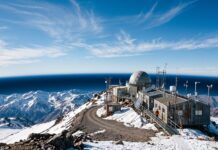
A critical pillar supporting this ambitious scientific mission is the robust operational infrastructure that enables sustained human presence in environments characterized by lethal temperatures, seasonal isolation, and extreme logistics. During the high-level discussions between institutional leadership, special emphasis was placed on Italy’s extensive track record in organizing complex polar expeditions. For more than four decades, national agencies have orchestrated intricate seasonal campaigns in Antarctica, maintaining advanced bases such as the coastal Mario Zucchelli Station and the inland Concordia Station, situated high on the polar plateau in one of the most extreme outposts on Earth. This long-standing operational mastery provides the indispensable physical platform upon which geologists, oceanographers, atmospheric chemists, and biologists conduct their groundbreaking observations.
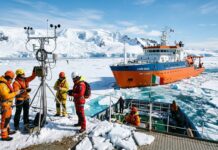
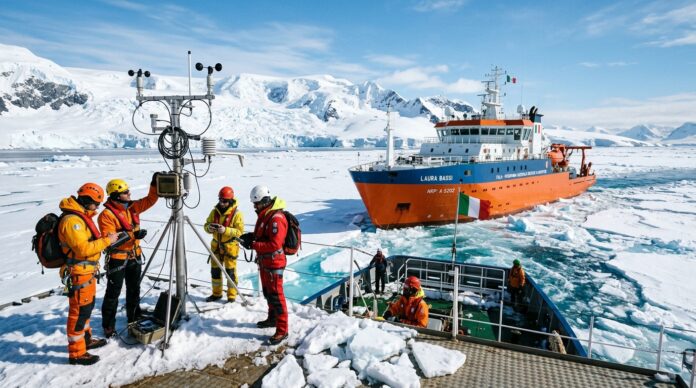
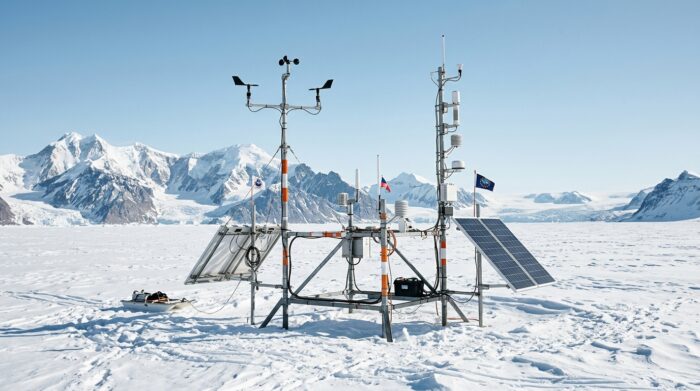
Scientific logistics in polar realms is an art of extreme precision and endurance. Transporting delicate scientific instrumentation, maintaining autonomous energy grids under sub-zero conditions, and deploying icebreaking research vessels such as the Laura Bassi through treacherous pack ice require an organizational apparatus of remarkable resilience. This operational foundation allows researchers to probe subterranean lakes, deploy autonomous underwater gliders beneath floating ice shelves, and extract ancient atmospheric archives from deep ice cores. Without such specialized logistics, the continuous acquisition of multi-decadal data sets—vital for calibrating predictive climate models—would simply be impossible. The planned White Paper explicitly recognizes that logistical excellence and scientific innovation are two inseparable sides of the same coin.
Among the most evocative contributions of polar research to contemporary science is the extraction of paleoclimatic archives preserved deep within continental ice caps. Through international consortiums such as the Beyond EPICA-Oldest Ice project, researchers are drilling miles down into the East Antarctic ice sheet to recover atmospheric gas bubbles that were sealed away up to one and a half million years ago. These microscopic capsules of ancient air offer an unvarnished chronicle of how carbon dioxide and methane concentrations fluctuated during historic warm and glacial epochs. By studying these pristine historical records, scientists are uncovering how sensitive the Earth system is to greenhouse gas perturbations, giving contemporary decision-makers an indispensable baseline to navigate current planetary transitions.
Furthermore, marine and oceanographic research spearheaded by institutions like OGS and INGV continues to illuminate the subtle, yet monumental, changes occurring within the deep abyss of polar seas. The Southern Ocean, which circulates around the Antarctic continent without land barriers, acts as the world’s most powerful heat and carbon sink. It is here that cold, dense, saline water sinks to the ocean floor to drive the global thermohaline circulation—the gigantic oceanic conveyor belt that distributes heat around the entire globe. Measurements taken across the polar seas indicate that the freshening of surface waters from melting ice is altering this delicate sinking mechanism, a revelation that carries profound implications for European and worldwide climate stabilization. Monitoring these shifts in real time enables scientists to deliver early warnings regarding changes in marine biodiversity and weather extremes.
Beyond atmospheric and oceanic dynamics, the emerging polar strategy directly embraces the geopolitical and legal realities shaping the Arctic and Antarctic. Antarctica remains governed by the visionary Antarctic Treaty System, an international legal instrument signed during the Cold War that permanently set aside an entire continent for peace, non-militarization, and open scientific inquiry. This historic treaty provides a shining blueprint for how diverse sovereign states can put aside national ambitions in favor of collective planetary preservation. The Italian initiative reaffirms that scientific diplomacy remains one of the most potent bridges for international cooperation, maintaining peaceful dialogue and common environmental standards even amidst fluctuating international tensions.
In the Arctic, however, the governance framework presents distinctive complexities. Governed through the Arctic Council and constrained by sovereign borders, the northern polar basin faces unprecedented maritime traffic, shifting indigenous habitats, and commercial pressures stemming from diminishing sea ice extents. Scientific researchers argue that the Arctic must not become a theater of unbridled exploitation, but rather an arena for cutting-edge environmental regulation and inclusive governance. By articulating a coordinated national polar strategy, Italy reinforces its status as an influential observer and contributor within international polar forums, advocating for the rigorous application of the precautionary principle and sustainable stewardship across every polar council.
Crucially, the spirit of the Rome conference reflects an infectious optimism centered on human ingenuity, interdisciplinary collaboration, and civic responsibility. The goal of compiling a comprehensive White Paper is not merely to document melting ice or catalog ecological vulnerabilities; it is designed to empower human society with the tools to construct durable green solutions. Insights gained from polar monitoring serve as direct blueprints for refining renewable energy technologies under extreme stresses, enhancing satellite-based Earth observation systems, optimizing sustainable shipping technologies, and designing resilient infrastructure for coastal cities adapting to rising ocean levels.
Equally inspiring is the deliberate effort to nurture the next generation of researchers, polar navigators, and environmental educators. Young scientists entering the polar arena today are breaking traditional disciplinary silos, fusing artificial intelligence, autonomous robotics, remote sensing, and community-level social science to decode the health of the cryosphere. The national polar platform serves as an incubator for these young scholars, ensuring that decades of institutional memory, operational know-how, and scientific curiosity are passed forward seamlessly. Their enthusiasm highlights a fundamental shift in perception: the poles are no longer perceived as distant frozen wastelands, but as living, beating environmental hearts that hold the keys to humanity’s collective future.
As Italy’s research institutions finalize the foundational chapters of the Polar White Paper, the global community gains a sophisticated blueprint for action. The document will act as an authoritative bridge between laboratories and parliaments, between oceanographic vessels and diplomatic negotiation tables. By uniting the Arctic, Antarctica, and the Third Pole into a single strategic vision, Italian science provides a compelling demonstration of environmental responsibility in action. The icy horizons of our world may be facing unprecedented pressures, but the mobilization of unified science, steadfast logistical capacity, and determined climate diplomacy offers a brilliant path forward for safeguarding the equilibrium of our shared home.
Fonte: CNR