
























The global race toward total decarbonization is defined not merely by the number of photovoltaic modules installed on sun-drenched hills or wind turbines spinning along coastal ridges, but by the quiet, highly sophisticated infrastructure that keeps power flowing when nature rests. In Italy, the appetite among institutional investors and clean energy pioneers to build this vital storage backbone has reached historic heights. Yet, beneath this record-setting enthusiasm lies an extraordinary structural bottleneck. A vast wave of technological innovation and private capital is currently washing against a wall of administrative inertia, creating a gap between the country’s decarbonization ambitions and the physical realities of its electrical transmission network.
The scale of this challenge was brought into sharp focus in Rome during the latest high-level roundtable organized by the Globe Italia National Storage Table. Delivering a definitive analysis of the sector, Irene Macchiarelli, Partner at management consulting firm Arthur D. Little Italy, presented an assessment of the nation’s energy storage ecosystem that serves as both a wake-up call and a roadmap for legislative modernization. Her findings illustrate a staggering imbalance: clean technology developers have formally submitted approximately 290 gigawatts of connection requests for utility-scale storage systems to the national grid operator. However, trapped in an intricate web of procedural hurdles, only about 10 gigawatts have managed to secure final contracts. This means that a minuscule three percent of proposed capacity is currently crossing the administrative finish line.
To put this 290-gigawatt figure into context, it represents an order of magnitude larger than the total storage capacity needed to fulfill Italy’s official National Integrated Energy and Climate Plan targets for the coming decade. The sheer volume demonstrates that private enterprise is not waiting on the sidelines. Global funds, domestic utilities, and specialized technology developers are eager to deploy capital in the central Mediterranean, recognizing Italy’s unmatched potential as a renewable energy powerhouse. Yet, because the regulatory pipeline acts as a restrictive funnel rather than an efficient conduit, the energy transition faces the genuine hazard of grid congestion, curtailed green power, and squandered economic momentum.
Modern electricity systems relying increasingly on variable solar and wind power cannot function reliably without massive flexibility assets. Battery Energy Storage Systems, alongside traditional and innovative pumped-storage hydro installations, represent the indispensable stabilizing force of the modern grid. They absorb surplus electricity during peak midday generation when solar panels flood the system with zero-marginal-cost electrons, and discharge that stored power during evening demand spikes when the sun sets. Without sufficient grid-scale batteries, clean energy must be routinely curtailed—essentially switched off and wasted—forcing grid operators to rely on expensive, polluting gas-peaker plants to maintain grid stability. Consequently, storage capacity is the non-negotiable linchpin that turns intermittent green power into a reliable, around-the-clock baseload resource.
The bottleneck documented by Arthur D. Little is not merely an inconvenience of calendar scheduling; it inflicts severe, measurable financial penalties on projects that could otherwise generate jobs and economic growth. In the current macroeconomic landscape of elevated interest rates and dynamic global supply chains, time is quite literally money. Arthur D. Little’s calculations reveal that the average authorization procedure for an energy storage asset in Italy now stretches beyond twenty-five months. Crucially, every single year of bureaucratic delay slashes up to eight percent off a project’s Net Present Value. When capital-intensive clean infrastructure projects languish in administrative purgatory for two or three years, their bankability deteriorates, underwriting assumptions collapse, and institutional lenders are forced to reassess their commitments.
This erosion of asset value creates an unintended screening mechanism that rewards speculative persistence rather than technological excellence. Patient infrastructure funds with low risk tolerances may look at these prolonged timelines and redirect their multi-billion-euro allocations toward international jurisdictions with more predictable permitting pathways, such as the United Kingdom, Germany, or several progressive regional markets across the United States. When equity partners withdraw or demand higher returns to compensate for bureaucratic unpredictability, the eventual cost of the energy transition rises for the end consumer, who ultimately pays for system flexibility through transmission tariffs and capacity market mechanisms.
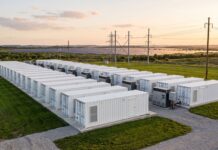
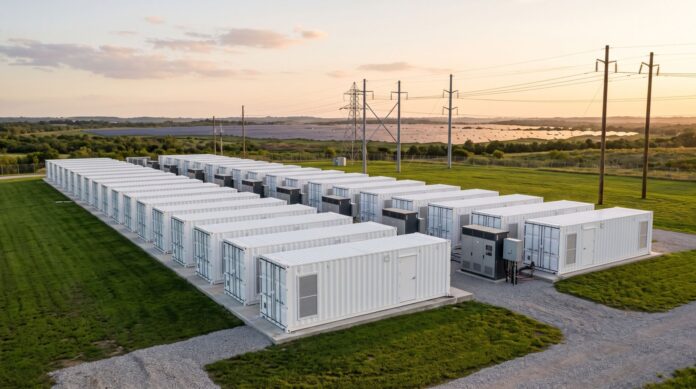
Dissecting the causes of this twenty-five-month timeline reveals a deeply fragmented permitting landscape. An energy storage project in Italy often requires simultaneous engagement with national ministries, regional administrations, local municipal councils, environmental agencies, and cultural heritage bodies. While storage facilities possess an exceptionally modest physical and visual footprint compared to traditional thermal power plants—often resembling nothing more conspicuous than neatly arranged shipping containers sited on industrial brownfields or agricultural fringes—they are frequently subjected to the same exhaustive, convoluted environmental assessments designed for heavy industrial complexes or sprawling highway infrastructure. The absence of a unified, standardized national framework leaves local officials to interpret complex electrical engineering standards without clear, centralized guidelines.
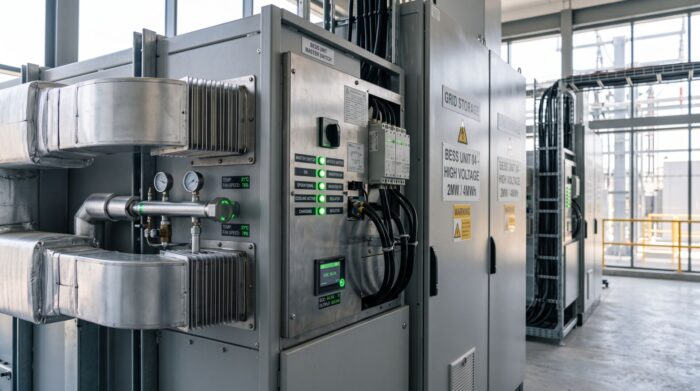
Furthermore, the connection queue itself suffers from a structural pathology. In an environment where obtaining an initial grid connection quote is relatively inexpensive, speculative developers submit multiple redundant applications across several adjacent territories to see which path encounters the least resistance. This practice floods the national grid operator with phantom requests, artificially bloating the nominal pipeline to 290 gigawatts and clogging the desks of technical reviewers who must rigorously evaluate every single application. The genuine, shovel-ready projects sponsored by well-capitalized operators find themselves waiting in the same procedural queue behind speculative filings, compounding the gridlock and frustrating both public and private stakeholders.
The timing of these structural bottlenecks is especially critical given the imminent launch of major market mechanisms designed to integrate storage into the national power market. Italy is actively fine-tuning its dedicated procurement framework for electric storage capacity, known as the MACSE mechanism, coordinated by the transmission system operator Terna and energy market authorities. Designed to facilitate long-term contracting and secure grid stability, the success of the MACSE auctions will depend entirely on the availability of a competitive, mature pool of permitted projects ready to break ground. If only a fraction of the pipeline possesses the requisite permits to participate, auction competition will be constrained, capacity costs could rise, and the scheduled deployment of essential grid flexibility will fall behind regulatory deadlines.
Resolving this challenge does not require lowering environmental standards or bypassing rigorous safety reviews; rather, it demands administrative modernization and regulatory clarity. Industry experts, including the analytical team at Arthur D. Little, argue that the path forward lies in establishing a true fast-track authorization channel for standalone storage installations. Because batteries emit no local air pollutants, generate negligible noise during operation, and can be enclosed within secure, landscaped perimeters, their administrative classification should reflect their low environmental impact. Creating standardized national templates for fire safety, environmental impact screening, and land-use zoning would eliminate the regional discrepancies that currently cause projects to stall indefinitely depending on the geographic province in which they are located.
Equally critical is the strategic management of upcoming connection windows and allocation processes, often termed Open Seasons. By introducing stricter financial milestones, non-refundable security deposits, and proof-of-land-control requirements early in the application process, regulatory authorities can quickly filter out speculative projects. When the grid queue is purged of inactive or opportunistic applications, technical regulators and regional permitting offices can concentrate their finite staffing resources on evaluating viable, mature infrastructure investments that are ready for immediate capital deployment.
The pace of technological advancement in the energy storage industry provides an additional reason why permitting must accelerate. The electrochemical systems being designed today, primarily based on advanced lithium iron phosphate chemistry and emerging sodium-ion configurations, offer higher round-trip efficiencies, longer lifespans, and superior safety margins than the technologies available just a few years ago. However, when an authorization process drags on for nearly three years, the specific battery cells and balance-of-plant components specified in the original technical filings often become obsolete before groundbreaking begins. Developers are then forced to submit project amendment requests, inadvertently triggering secondary review cycles that restart administrative clocks. Accelerating the permitting timeline synchronizes the regulatory regime with the rapid cadence of global technological progress.
An optimistic perspective emerges when examining the broader European context. Italy has already demonstrated world-class engineering acumen in operating one of the most sophisticated, digitally managed transmission grids on the planet. Its transmission system operator is globally renowned for excellence in smart grid integration, and the country boasts an extensive legacy of pumped-storage hydropower in its northern Alpine valleys. If the administrative apparatus can be streamlined to mirror this technological sophistication, Italy has every ingredient necessary to become Southern Europe’s primary clean energy balancing center, exporting green electrons to continental neighbors while ensuring complete domestic energy security.
Regional equity and community engagement also stand to gain enormously from a modernized storage framework. Distributed energy storage facilities can be strategically deployed in Southern Italy and the major islands of Sicily and Sardinia, where renewable resource density is highest, mitigating the transmission bottlenecks that periodically prevent clean solar and wind energy from reaching northern industrial load centers. Local municipalities that host these modern facilities enjoy municipal tax revenues and grid reinforcement without the heavy industrial footprint, particulate emissions, or water consumption associated with fossil-fueled generation. In many cases, battery facilities can be colocated with existing industrial substations, breathing new economic life into degraded sites while preserving natural landscapes.
The dialogue initiated at the Globe Italia National Storage Table underscores that the solution is well within reach. The diagnosis offered by Arthur D. Little provides the clarity policymakers need to cut the Gordian knot of permitting bureaucracy. By harmonizing national legislation, introducing strict performance criteria for connection requests, and recognizing storage as an urgent strategic priority for national sovereignty, Italy can transform a 290-gigawatt bottleneck into an unprecedented engine of sustainable development. The capital is eager, the technology is proven, and the environmental necessity is undeniable; modernizing the administrative path is the vital final step to turning Italy’s clean energy blueprint into an enduring operational reality.