

















In a world that, for over fifty years, has pushed us to believe—through relentless marketing campaigns—that “more was inevitably better” (more exotic ingredients with miraculous promises, more endless steps in the skincare routine, more protein in every single meal, more shiny and complex packaging), 2026 is marking an unprecedented historical turning point. We have officially entered, and with a certain urgency dictated by the times, the era of Radical Simplification and Biological Minimalism. Health, longevity, and true well-being are no longer built by adding complex supplements or chasing the latest miraculous product, but by methodically and intelligently subtracting what disturbs our natural balance and overloads our delicate detoxification systems.
This in-depth investigation analyzes the two fundamental pillars of this lifestyle revolution: the definitive and conscious shift to a Whole-Food Plant-Based (WFPB) diet (based on whole plant foods) and the mass transition toward anhydrous solid cosmetics. These are two only seemingly distant worlds, which in reality share the exact same, rigorous philosophy: sacred respect for the protective barrier—the intestinal and the cutaneous one—and the drastic reduction of the chemical and plastic footprint, both in our body and in the environments in which we live.
Plant-Based Eating: The Infrastructure of Human Capital
The preconceived idea that plant-based eating is composed exclusively of sacrifices, deprivations, and dangerous deficiencies is a 20th-century cultural legacy, skillfully and long fueled by industrial monopolies of livestock and food processing that today are struggling to reconvert to survive. Modern nutrition science, finally freed from the most evident conflicts of interest, has incontrovertibly and reproducibly demonstrated that a Whole-Food Plant-Based (WFPB) regime is not simply “sufficient” for human survival but represents the most powerful preventative and therapeutic protocol at our disposal to combat the current global epidemic of chronic non-communicable diseases.
The Microbiome as an Energy and Immune Powerhouse
The first, and perhaps most important, benefit of a strictly plant-based diet lies in the health and diversity of the gut microbiome, today considered by the medical community as a true organ in its own right. Plants are the only foods in nature to contain fiber. Today, fiber is no longer considered mere “inert ballast” that placidly aids intestinal transit but is recognized as the exclusive and irreplaceable fuel for our most precious symbiotic bacteria.
A daily diet rich in legumes (chickpeas, lentils, beans), ancient and whole grains (oats, spelt, quinoa), cruciferous vegetables (broccoli, kale), nuts, and seeds exponentially increases the production of short-chain fatty acids, among which butyrate stands out. These compounds are extraordinary molecules, fundamental not only for providing energy to the cells lining the colon but for tightly sealing the tight junctions of the intestinal barrier. In this way, dangerous “Leaky Gut Syndrome” is prevented, a clinical condition that allows toxins and pathogens to enter the bloodstream and is recognized as the triggering basis for countless autoimmune pathologies, allergies, and systemic inflammatory disorders.
A healthy microbiome, nourished by botanical richness and diversity, actively modulates our immune system (80% of which physically resides precisely along the intestinal tract), drastically reducing susceptibility to seasonal infections, improving vaccine response, and preventing disproportionate autoimmune reactions.
The Fight Against Low-Grade Silent Inflammation
Many of the most devastating and common modern pathologies in Western countries—from type 2 diabetes to cardiovascular disease, from hypertension to certain forms of senile dementia and various types of cancer—originate from a common root: a state of low-grade chronic inflammation (Low-Grade Chronic Inflammation). This is a true internal fire, asymptomatic for decades, silently wearing down the walls of our blood vessels and our vital organs.
Animal-derived proteins and fats, especially if from processed meats (cold cuts, sausages) or intensive farming, are inherently rich in strongly pro-inflammatory compounds. Among these, we find high concentrations of saturated fats, heme iron (which promotes cellular oxidative stress), Neu5Gc sialic acid (a molecule alien to the human body that triggers a constant antibody response), and the precursors of toxic metabolites such as TMAO (trimethylamine N-oxide). TMAO is produced directly by our “bad” gut bacterial flora in response to the ingestion of carnitine and choline, substances omnipresent in large quantities in red meat and eggs, and is today one of the most accurate markers for predicting heart attack risk.
Massively replacing these harmful compounds with the phytonutrients, antioxidants, polyphenols, and vitamins present in the plant kingdom means literally throwing water on this internal “fire,” extinguishing it at the root. The integral plant-based diet is, in fact, the ultimate anti-inflammatory and anti-aging diet, capable not only of preventing but in many clinically documented cases, reversing cardiovascular disease already underway.
Cardiovascular and Metabolic Health: The Geopolitics of Longevity
In 2026, the management of glycemic peaks and LDL cholesterol levels is no longer delegated exclusively to pharmacology. Physiological modulation through soluble and insoluble plant fibers has become the first and most important line of medical defense, surpassing the effectiveness of synthetic drugs in the long term for those who decide to change their lifestyle promptly. Complex carbohydrates in their whole form (not refined flours) release vital energy into the blood slowly and constantly. This prevents insulin peaks, combats insulin resistance, and zeroes out that oxidative stress that is typical and debilitating of high-protein, “keto,” or diets based on ultra-processed foods.
Adopting a plant-based diet, it is important to clarify, does not mean filling one’s cart with ultra-processed industrial substitutes (so-called “vegan junk food” like fake burgers or industrial plant cheeses), which are often pure concentrates of refined coconut oils, modified starches, salt, and additives. It means, on the contrary, rediscovering the magnificent biological complexity of whole, preferably local, organic, and seasonal foods. It is a choice of true individual food sovereignty that reduces dependence on complex, cruel, and highly polluting industrial chains, guaranteeing ourselves an immensely more resilient, vibrant, and long-lasting health.
Solid Cosmetics: The “Dry” Revolution for Skin Health
While we care for our body’s interior by nourishing it with pure and biologically appropriate food, an equally vast and radical revolution is taking place externally. Solid cosmetics—which includes shampoo, body wash, facial cleansers, nourishing conditioners, body butters, and deodorants formulated in a bar—has rapidly gone in very few years from being a niche product, reserved for a few “environmental activists,” to becoming the spearhead and absolute excellence of professional dermocosmetics in 2026. This incredible market transition is not fueled solely by the urgency to reduce single-use plastic pollution but by an increasingly vast and documented clinical awareness of the irreplaceable benefits for our skin’s health and its cutaneous appendages.
The Biological Efficiency of Anhydrous: Water-Free, Toxic Preservative-Free
Few consumers know that a traditional liquid cosmetic (like the classic body wash from the supermarket or shampoo in a bottle) is composed of a percentage varying drastically from 70% up to 85% by simple water. This standardized formulation has an insurmountable physiological, engineering, and toxicological flaw: in nature, where there is stagnant water at room temperature, there is instant and uncontrollable microbiological, bacterial, and fungal proliferation.
To ensure that bottle of liquid shampoo remains stable and mold-free on store shelves or in the hot, humid environment of our showers for months or even years, chemical companies are forced to add massive, heavy doses of very powerful chemical preservatives: parabens, triclosan, phenoxyethanol, isothiazolinones, and formaldehyde releasers. These substances, born to kill bacteria in the bottle, are often aggressive even with our cells, deeply alter the delicate protective cutaneous microbiome, and, in the worst-case scenario, are classified by independent science as potent endocrine disruptors (substances capable of mimicking or blocking our hormones) or as insidious contact allergens.
Solid cosmetic products, being totally anhydrous (meaning without water in their final formulation), are inherently and biologically much more stable. They do not offer any favorable environment for bacterial growth and, consequently, require a drastically lower, if not zero, quantity of synthetic chemical additives for their preservation. Very often they base themselves exclusively on the antioxidant and natural preserving action of pure essential oils, vitamin E, or highly stable vegetable butters (like cocoa or shea butter). Switching to “solid” means eliminating with a single gesture that superfluous invisible chemical “cloud” to which we daily, and often unconsciously, expose our body’s largest organ: the skin.
Gentle Surfactants and High Concentration of Actual Active Ingredients
Contrary to an old and unfounded popular belief that associates solid soap with dryness (confusing old Marsiglia soap with its very basic pH with modern cosmetics), modern solid detergents (technically called “Syndet,” meaning synthetic but naturally derived detergents) are jewels of cosmetic engineering. They are formulated using surfactants derived from renewable plant sources (like coconut oil, olive oil, or sugars), which are extremely gentle, highly dermo-compatible, and easily biodegradable in the environment. These bars rigorously respect the slightly acidic physiological pH of human skin and do not aggredisco the precious hydrolipidic film that protects us from external aggressions.
Furthermore, the anhydrous advantage is mathematical: because the active ingredients are not diluted in liters of useless water, they are present in the solid bar in enormously higher concentrations. Nourishing butters, precious cold-pressed oils, lenitive botanical extracts, clays, and purifying powders offer the skin and hair a real, profound, and highly concentrated therapeutic treatment, not just fleeting, superficial cleaning. In terms of pure efficiency, a single 100-gram bar of solid shampoo is quietly equivalent to three or even four traditional 250ml liquid bottles. This guarantees not only significant economic savings in the medium term but professional-level cosmetic effectiveness, unparalleled by products in mass distribution.
Toxicological Prevention: Eliminating Plastic Migration
Choosing minimalism in beauty and physically eliminating the plastic bottle from one’s bathroom means performing a gesture of vital importance for personal toxicological prevention. It means eliminating at the root the insidious risk that invisible microplastics, phthalates, bisphenols (like the infamous BPA), and other plasticizing substances slowly but inexorably migrate from the packaging to the liquid product and, subsequently, through pores dilated by hot water, penetrate our skin, reaching the lymphatic and blood systems.
Skin, let us never forget, is a permeable and absorbent organ. Solid cosmetics, which by their nature need only minimalist packaging, sold wrapped in simple recycled paper, compostable cardboard, or placed in infinitely refillable aluminum tins, is a strategic and intelligent choice for long-term health for the entire family.
Waste Management in Minimalism: Organics and Metals
Embracing biological minimalism does not mean ignoring the importance of the “end of life” of the materials that inevitably pass through our homes. On the contrary, a conscious consumer knows that every scrap has its precise destiny in a well-functioning circular economy.
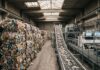
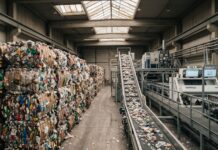
When we adopt a plant-based diet, we physiologically increase the production of natural scraps: potato peels, coffee grounds, vegetable and fruit scraps. It is crucial to remember that organic material and must be disposed of exclusively in the appropriate compostable containers. Every single organic scrap managed correctly transforms into precious compost, a natural fertilizer that will return to nourish the earth, perfectly closing the biological cycle we started at the table.
Parallelly, in the process of eliminating plastic from our bathroom and our pantry, we rely more and more on eternal and infinitely recyclable materials, like aluminum. The tins for storing solid soaps, or the containers of preserved plant foods, are precious metals. The most common error, and the most harmful for the ecological transition, is mixing these fractions. Minimalism teaches us the value of purity: purity in the ingredients we eat, purity in the cosmetics we use, and extreme purity in the separation of our scraps, so that everything can come back to new life.

Total Convergence: Ethics, Physiology, and Domestic Resilience
The profound, inseparable, and fascinating link between these two worlds—that of whole plant-based eating and that of solid cosmetics—is dictated by biological and ethical coherence. From the point of view of human physiology, it makes absolutely no logical sense to commit to nourishing the body with organic, pure, and antioxidant-rich foods, struggling strenuously to break down internal inflammation, if then, parallelly, externally we daily expose it to a veritable toxicological “storm” of microplastics, endocrine disruptors, occlusive silicones, and petrolchemical-derived detergents under the hot water of the shower. Health in 2026 is conceived, finally, as a unique and indissoluble ecosystem, a continuum between what we put into the body and what we put on it.
On a global scale, drastically reducing the intake of meat and dairy products not only lowers populations’ blood pressure and reduces national health spending, but liberates vast agricultural lands previously destined for grazing or intensive soy monoculture for feed. These lands, healed from pesticides, can be reconverted and destined for the ethical and sustainable cultivation of medicinal herbs, dyeing plants, and top-quality botanical raw materials for the local bio-cosmetics industry.
It is a magnificent circle that closes perfectly upon itself. The rigorous plant-based choice at the table reduces frightening CO2 emissions by 75% and lowers unsustainable global water consumption by 50%. Parallelly, the daily use of solid and anhydrous cosmetics eliminates at the root the release into the environment of thousands of tons of complex and polluting plastic waste that, slowly degrading in ecosystems, would inevitably end up returning to us, irreperabilmente polluting the food chain and aquifers in the form of omnipresent microplastics. The future of the macro-global economy and individual public health lies uniquely in our daily ability to regenerate the resources we use, starting from the apparently smallest decisions we make between the kitchen stove and the bathroom mirror.
Conclusion: Well-being as an Act of Resistance and Connection
Embracing without reservation whole plant-based eating and anhydrous solid cosmetics does not in any way represent a punitive sacrifice to expiate our environmental sins, nor is it a passing trend destined to fade. It is, much more deeply, a true act of intellectual and physical resistance against an obsolete industrial, food, and cosmetic system that constantly wants us dependent on needlessly complex, economically expensive, often physiologically harmful, and always over-packaged products. It is an audacious return to purity and simplicity, a choice that liberates immense cognitive resources (eliminating decision fatigue in front of the shelves), economic resources, and, above all, precious physiological energies for our body.
In this delicate historical phase we are navigating, we celebrate this new, radiant awareness: every single plant-based and colorful meal we prepare, and every compact bar of solid soap we rub between our hands, are solid direct investments in our personal longevity and in the resilience of the entire planet Earth. Beauty, the most authentic, magnetic, and long-lasting kind, is born and flourishes only from this perfect symbiotic balance: being limpid and clean inside and out, respecting the temple of one’s body and the temple of the natural environment, living one’s days without leaving behind inquinanti dross and traces that the world cannot joyfully reabsorb. Biological Minimalism, ultimately, is never subtraction; it is a formidable addition of quality, of vigor, of vibrant health, and, above all, of inestimable freedom.