

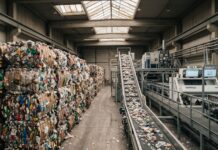



















March 18th is not just any date for those who care about the planet’s destiny. It is Global Recycling Day, an anniversary that, year after year, is gaining increasingly significant political and economic weight. If recycling was once perceived as a marginal activity, almost a hobby for willing citizens, today in 2026 it has officially become humanity’s “seventh resource.” After water, air, oil, natural gas, coal, and minerals, recycling is the only reservoir that does not run out but is fed through our conscious consumption and technological innovation.
The challenge ahead is enormous. We live in an economic system that for over a century followed a dead-end track: extract, produce, consume, discard. This “linear” model has led the planet to collapse, saturating landfills and depleting natural resources at an unsustainable rate. Global Recycling Day was born precisely to reverse this course, promoting the circular economy as the only possible model to combine economic growth and ecosystem protection. But to do this, we must radically change how we look at what we call “waste.”
The Revolution of Metals and Organics: Quality Makes the Difference
One of the pillars of modern recycling lies in the correct separation of materials at the source. Often we tend to generalize, but precision is fundamental to ensuring that an object can actually be reborn. Take the example of metals, specifically cans. They are mainly composed of aluminum or steel, materials that have an extraordinary characteristic: they can be recycled infinitely without losing any of their physical-chemical properties. Recycling a can saves up to 95% of the energy needed to produce a new one from bauxite (the raw mineral).
For this reason, it is essential that metals are managed separately and with care, avoiding contaminations that could compromise the smelting process. Every correctly sorted can is a small victory for the country’s energy independence, as it reduces the need to import raw materials from areas of the world that are often politically unstable or subject to mining practices that are devastating for the environment.
At the same time, managing organic waste (food waste) represents the most important quantitative challenge. About a third of the waste produced in domestic settings consists of food scraps. If disposed of correctly, organic waste becomes a precious resource through composting or anaerobic digestion, transforming into natural fertilizer (compost) for agriculture or biomethane to power our cities. However, the golden rule remains clear separation: organic waste must be managed separately from any other waste to avoid “polluting” other recycling chains and to guarantee high-quality compost, free of plastic or glass fragments. In this economy of regeneration, the citizen is not just a user, but the first “sorter” of a complex industrial chain.

Urban Mines and Critical Raw Materials: The Treasure in Our Drawers
While traditional chains for paper, glass, and plastic continue to consolidate, the true frontier of recycling in 2026 has shifted to WEEE (Waste Electrical and Electronic Equipment). Our smartphones, tablets, computers, and electric car batteries contain what the European Union defines as “Critical Raw Materials”: lithium, cobalt, neodymium, rare earths, and precious metals like gold and silver.
These materials are the “bricks” of the digital and energy transition. Without them, we cannot build solar panels, wind turbines, or electric motors. The problem is that Europe is almost totally lacking in terms of extraction, depending for over 90% on foreign supplies, often controlled by monopolistic regimes. This is where the concept of the “urban mine” comes into play.
Extracting one gram of gold from a traditional mine requires excavating and treating tons of rock using toxic chemicals; the same amount of gold can be obtained by recycling a few dozen motherboards from old computers. Global Recycling Day reminds us that we have a treasure in our drawers: millions of unused devices that, if placed in the correct chain, could guarantee Italy and Europe the supply security necessary for the green transition. New hydrometallurgy and pyrometallurgy technologies are making this process increasingly efficient and less impactful, but the starting point remains the delivery of waste to authorized collection centers.
Eco-design: Recycling Before Even Producing
However, recycling cannot be the only solution. We cannot continue to produce objects that are impossible to disassemble, hoping that recycling technology will work miracles. This is where eco-design comes in. The real challenge of the circular economy in the next decade will be designing products while already thinking about their “end of life.”
A well-designed product is easy to repair, easy to disassemble, and composed of materials that do not contaminate each other. Too often today we are faced with “multi-layer” packaging (mixes of plastic, paper, and metal glued together) that make recycling uneconomical or technically impossible. European regulation is pushing toward mandatory circular design criteria: producers must be responsible for the fate of their products. Recycling must become the last resort of a journey that first passes through waste reduction and the reuse of objects.
Recycling and Climate Change: An Inseparable Link
There is a direct and scientifically proven link between our ability to recycle and the fight against global warming. The extraction and processing of virgin raw materials are responsible for about 50% of global greenhouse gas emissions and 90% of biodiversity loss. Every time we use recycled material instead of virgin material, we are literally taking “fuel” away from climate change.
The recycling industry is also a formidable engine for employment. As we recently discussed, the transition to a circular economy requires millions of new qualified workers: optical sorting plant technicians, materials engineers, reverse logistics experts, and specialized operators in complex waste management. It is an economy that does not delocalize because waste is produced locally and must be treated as close as possible to the point of generation to reduce the impact of transport.
Conclusion: Toward a Regenerative Future
On this Global Recycling Day, March 18th, 2026, the message is clear: we no longer have time for half-measures. Recycling must shift from being a “damage management” activity to a “value creation” strategy. Every time we correctly sort organic waste, every time we carefully separate metals like cans, we are performing a political act in the noblest sense of the term: we are deciding what shape to give to the world of tomorrow.
Italy holds a leadership position in Europe regarding packaging recycling, but we cannot rest on our laurels. We must improve the quality of collection, invest in technologically advanced treatment plants—especially in the South—and, above all, educate new generations to no longer see the world as a disposable supermarket, but as a closed ecosystem where every end is just the beginning of a new cycle.
The “seventh resource” is in our hands. Making it flourish is not just an ecological choice; it is the only way we have to remain human on a planet that has run out of room for our mistakes.