
























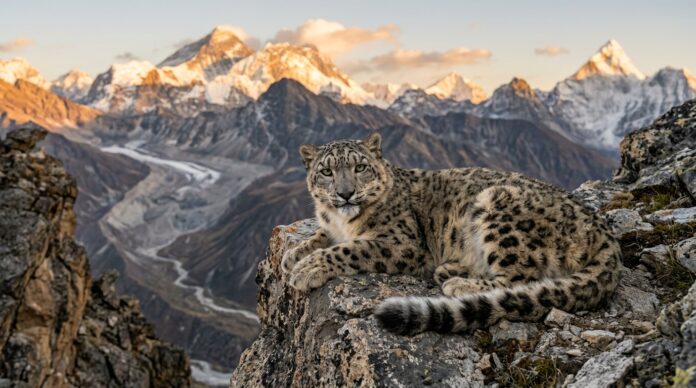
High above the clouds, where craggy cliffs pierce the thin air of Central Asia, roams one of the most enigmatic creatures on Earth. Known colloquially as the ghost of the mountains, the snow leopard moves through precipitous ravines with silent grace, cloaked in thick, smoke-grey fur dappled with dark rosettes. For centuries, this solitary big cat has occupied a mythic place in the folklore of mountain communities from the Himalayas to the Altai. Yet today, the snow leopard serves as something far more concrete than a legend: it is the supreme ecological indicator of the health of high-altitude habitats that supply fresh water to billions of people across the globe. Each year, the observance of International Snow Leopard Day brings global attention to this magnificent predator, illuminating the intricate threads that bind its survival to the future of our planet.
The genesis of this international observance traces back to October 2013, when political leaders and environmental ministers from all twelve snow leopard range nations gathered in Bishkek, Kyrgyzstan. In an unprecedented display of ecological diplomacy, governments that frequently find themselves divided by geopolitical friction—including China, India, Pakistan, Nepal, Bhutan, Russia, Mongolia, Kazakhstan, Kyrgyzstan, Tajikistan, Uzbekistan, and Afghanistan—set aside their political differences to sign the historic Bishkek Declaration. This landmark agreement formally established the Global Snow Leopard and Ecosystem Protection Program and designated the twenty-third of October as an annual milestone dedicated to raising awareness, evaluating conservation progress, and mobilizing international support for mountain preservation.
Understanding the significance of the snow leopard requires appreciating its place within the wider biosphere. Scientifically classified as Panthera uncia, this apex predator occupies a specialized ecological niche that spans rugged alpine and subalpine zones between three thousand and five thousand meters above sea level. By preying predominantly on wild mountain ungulates such as the blue sheep, Asiatic ibex, argali, and markhor, the snow leopard keeps herbivore populations in check. This predatory balance prevents the overgrazing of sensitive alpine meadows, which in turn preserves deep-rooted vegetation that stabilizes steep hillsides, minimizes soil erosion, and reduces the risk of devastating landslides in downstream valleys.
Furthermore, the rugged highlands inhabited by snow leopards are universally recognized as the water towers of Asia. These glacier-capped peaks feed the headwaters of the world’s most critical river networks, including the Indus, Ganges, Yangtze, Yellow, Mekong, and Amu Darya. More than two billion people rely directly on the glacial runoff originating from these peaks for drinking water, agricultural irrigation, and hydroelectric energy. When an ecosystem is robust enough to support a breeding population of snow leopards, it inherently possesses the biodiversity, hydrological resilience, and floral complexity required to sustain these continental-scale water basins. Protecting the cat is, by extension, an act of protecting humanity’s most vital freshwater reservoirs.
Despite its vast geographical distribution, which encompasses nearly two million square kilometers, the snow leopard faces severe existential pressure. Recent assessments by conservation coalitions estimate the global wild population to be between four thousand and six thousand five hundred mature individuals, earning the species a classification of Vulnerable on the International Union for Conservation of Nature Red List. Accurately counting these secretive animals across inaccessible, politically volatile, and physically unforgiving terrain has long been one of wildlife biology’s greatest hurdles. Through the ongoing Population Assessment of the World’s Snow Leopards initiative, scientists are pairing non-invasive genetic scat sampling, automated camera traps, and artificial intelligence-driven pattern recognition to assemble the most accurate demographic portrait to date.
The findings from these surveys underline a sobering reality: the ghost of the mountains is navigating a landscape in the throes of rapid, compounding change. Chief among the long-term perils is anthropogenic climate disruption. Mountain biomes are warming at up to twice the global average rate, a phenomenon known as elevation-dependent warming. As alpine temperatures climb, tree lines advance upward into higher altitudes, systematically squeezing and fragmenting the open, rocky tundra the snow leopard requires for hunting and camouflage. Glaciers are receding at accelerating rates, altering seasonal water availability and disrupting the delicate floral phenology that alpine ungulates depend upon for sustenance.
Parallel to climatic shifts, human activities are fragmenting once-contiguous wilderness corridors. Central Asia and the Tibetan Plateau are experiencing unprecedented infrastructural growth, marked by the expansion of linear transport networks, high-voltage power transmission lines, open-cast mining operations, and large-scale hydroelectric installations. When roads bisect natural migration routes, they not only increase the incidence of vehicle collisions but also grant unprecedented access to previously remote valleys, inadvertently opening pathways for illegal wildlife trade, unsanctioned resource extraction, and unregulated pastoral grazing.
Among the most pressing and immediate drivers of snow leopard mortality is human-wildlife conflict. Pastoralist communities living on the margins of the high mountains depend almost entirely on livestock, including yaks, sheep, and goats, to survive in unforgiving climates. When wild prey numbers dwindle due to competition with domestic herds or unregulated hunting, hungry snow leopards inevitably turn to domesticated animals for food. For a subsistence herder, the loss of several animals to a single predator can represent an insurmountable financial catastrophe. Historically, such encounters have provoked retaliatory poisonings, shoot-on-sight responses, and the deployment of lethal leg-hold traps.
Yet, the narrative surrounding the snow leopard is far from hopeless. Across the species’ range, a paradigm shift is underway, moving away from outdated fortress conservation models that exclude local populations and toward inclusive, community-based stewardship. Groundbreaking projects pioneered by local organizations demonstrate that high-altitude communities can become the most impassioned guardians of biodiversity when conservation is aligned with their socio-economic prosperity. Rather than viewing the snow leopard as a financial liability, pastoralists are supported through innovative mechanisms that turn coexistence into a shared asset.
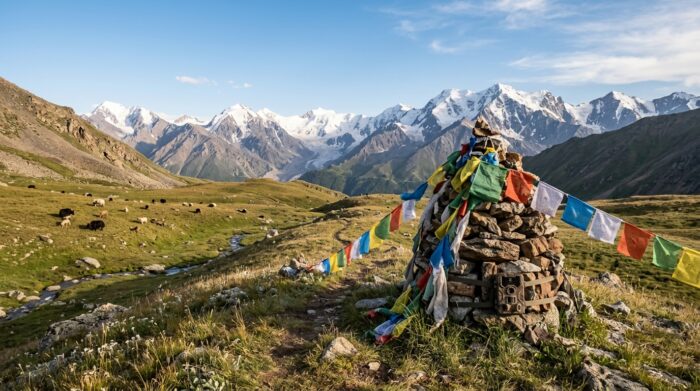
One exemplary initiative is the establishment of community-run livestock insurance schemes and the construction of predator-proof corrals. In remote Himalayan hamlets, where traditional stone enclosures allowed snow leopards to leap inside and decimate entire herds in panic, conservationists and villagers have collaborated to install wire mesh roofs and reinforced steel doors. These simple, low-cost architectural interventions have reduced nighttime corral attacks to virtually zero. Concurrently, cooperative insurance funds managed directly by village councils provide swift, transparent compensation for verified pasture losses, defusing the urge for retaliatory action and restoring peaceful coexistence.
Equally transformative is the integration of high-altitude conservation with circular economy principles and sustainable livelihood development. A prominent illustration is found in the sustainable fiber sector, particularly surrounding cashmere and wool production. The explosion of fast fashion over recent decades fueled a dramatic surge in cashmere goat populations across the steppe and mountain rangelands of Mongolia and China. This skyrocketing livestock density triggered widespread desertification, as goats consume grasses down to the root, depleting the forage available for wild mountain ungulates. In response, enlightened conservation groups have partnered with nomadic herders to foster closed-loop, sustainable handicraft value chains.
Through participatory initiatives like Snow Leopard Enterprises, women in pastoral communities transform local sheep wool and sustainable camel hair into high-value felt crafts, artisanal textiles, and yarn. In exchange for access to international fair-trade markets and guaranteed premium pricing, community members enter into binding conservation covenants, pledging to halt poaching, protect wild prey species, and adhere to rotational grazing quotas that prevent rangeland degradation. This regenerative approach ensures that economic value is retained within the community, fostering self-sufficiency while drastically curbing the need to maintain environmentally destructive, oversized goat herds.
Furthermore, regenerative ecotourism is carving out a vital role in the transition toward a green mountain economy. In places like Ladakh in northern India and the high valleys of Nepal, community-based homestay programs invite travelers from around the world to track snow leopards alongside former hunters turned wildlife guides. Revenue generated from these visits is pooled into community funds used for village infrastructure, solar electrification, medical clinics, and school supplies. When a living snow leopard generates sustained, cross-generational income for an entire valley, its intrinsic value eclipses any short-term gain derived from poaching or pelt trafficking.
Technological innovation is providing conservationists with unprecedented capabilities to monitor and protect these elusive felines. Satellite telemetry collars have begun revealing previously unknown transboundary corridors, highlighting the vast home ranges that these cats inhabit—often exceeding several hundred square kilometers for a single male. Machine learning algorithms now sift through millions of camera-trap photographs within seconds, distinguishing unique rosette patterns to identify specific individuals. Additionally, researchers are analyzing environmental DNA collected from mountain water sources, allowing biologists to detect the elusive presence of snow leopards without ever catching a direct glimpse of them.
Despite these technological strides, the survival of the snow leopard remains deeply contingent upon political will and international collaboration. Because snow leopards recognize no geopolitical borders, their conservation demands a united regional vision. Fragmented reserves bounded by barbed-wire national frontiers cannot sustain genetically viable populations over the coming century. The Global Snow Leopard and Ecosystem Protection Program has established a network of twenty-three priority landscape complexes across Asia, aiming to secure large, contiguous zones through integrated management plans. This approach proves that conservation can serve as a catalyst for environmental diplomacy, forging cooperative alliances between sovereign nations even in the midst of regional tensions.
The conservation of the snow leopard is also inexorably bound to the worldwide decarbonization agenda. The preservation of high-altitude ecosystems cannot succeed in isolation from international climate action. Mitigating greenhouse gas emissions to stabilize global temperatures below dangerous thresholds is the only way to preserve the permafrost, glacial tongues, and alpine meadows that define the species’ evolutionary home. The international community must recognize that investing in the conservation of Central Asia’s highlands is not merely a regional charity effort, but an imperative pillar of global climate adaptation.
International Snow Leopard Day challenges us to reconsider humanity’s broader relationship with nature. The majestic feline that roams the ridges of the world’s highest peaks is an emblem of nature’s raw resilience, yet its vulnerability exposes the far-reaching consequences of our global footprint. When we commit to protecting the snow leopard, we commit to something far larger than a single species: we safeguard the ecological integrity of the world’s greatest mountain ranges, ensure clean water access for downstream populations, support the dignity and livelihoods of indigenous pastoralists, and affirm that economic progress must function within ecological boundaries.
As we look to the future, the message radiating from the peaks of Central Asia is one of profound hope and shared responsibility. By uniting indigenous wisdom with modern ecology, harmonizing sustainable trade with wildlife preservation, and championing diplomacy over division, we can ensure that the ghost of the mountains will never fade into a memory. In the silent tracks left upon freshly fallen alpine snow lies an enduring truth: when we choose to protect the wild places of this world, we ultimately secure our own future upon this fragile, interconnected planet.