
















In 2025, European accommodation facilities absorbed nearly 3.1 billion overnight stays, with over 61% of this massive human movement concentrated in just four countries: Spain, Italy, France, and Germany. The vast majority of this migration targets the Mediterranean coastline during a narrow summer window, pushing marine ecosystems past their physical breaking point and stripping the sea of its natural defenses against global warming. The sheer volume of arrivals has transformed from an economic engine into an environmental stressor, overloading local infrastructure and degrading the very habitats required to keep the sea resilient.
The threat extends far beyond crowded beaches and booked-out hotels. According to the environmental organization Marevivo, the degradation of marine habitats driven by human activity directly increases the vulnerability of the Mediterranean to marine heatwaves and biodiversity loss. When coastal ecosystems are subjected to the intense physical and chemical pressures of overtourism, their capacity to buffer the effects of climate change collapses. Protecting these underwater environments is now the primary defense mechanism to ensure the sea can withstand rising global temperatures.
United Nations data confirms that approximately 80% of global tourism is concentrated in coastal areas, a spatial bottleneck that amplifies environmental damage. The core issue lies not just in the absolute number of travelers, but in their extreme concentration in both space and time. Eurostat figures reveal that more than 31% of all tourist overnight stays in the European Union occur exclusively during July and August. In Mediterranean nations, this seasonality is even more aggressive. Greece records 41.6% of its total annual overnight stays within these two summer months, while in Croatia, the figure surges past 54%.
Italy sits at the center of this logistical pressure cooker. Recording nearly 477 million overnight stays in 2025, it ranks as the second European country for tourist presence, trailing only Spain. This intense seasonal influx forces coastal municipalities, often scaled for small winter populations, to manage the waste, water usage, and physical footprint of millions of transient residents. The immediate effects on fragile coastal ecosystems are easily measurable and rapidly worsening.
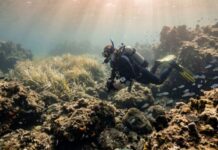
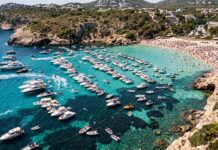
One of the most severe ecological casualties is the Posidonia oceanica, a seagrass endemic to the Mediterranean that acts as a vital carbon sink and a nursery for marine life. Indiscriminate anchoring by pleasure craft physically tears up these underwater meadows. The damage goes beyond immediate biomass loss; research shows that Posidonia beds weakened by anchor dragging and other anthropogenic pressures, such as bottom trawling, lose their resilience to climate variations. Intact seagrass meadows can largely withstand rising sea temperatures, whereas degraded patches quickly succumb to marine heatwaves.

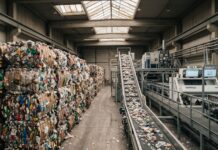
Above the water line, the sudden population spike overwhelms municipal infrastructure. Coastal wastewater treatment plants, often outdated or inadequately sized, struggle to process the exponential increase in sewage during the peak summer months. When these systems fail or bypass untreated water into the sea, they release massive amounts of nutrients. This sudden organic overload, combined with elevated summer sea temperatures, creates the perfect chemical conditions for the proliferation and persistence of mucilage blooms. Simultaneously, the drastic increase in solid waste and general wastewater discharge plummets local water quality, compounding the stress on marine fauna and flora.
“The future of tourism in the Mediterranean depends on the health of the Mediterranean itself,” stated Rosalba Giugni, President of Marevivo. “The problem is not tourism, which represents an extraordinary opportunity for economic, cultural, and social growth. The problem is a model of territorial use that concentrates millions of people in the same places and at the same times of the year, exerting ever-increasing pressure on already fragile ecosystems. Today we must choose which side to be on: whether among those who continue to fuel this pressure or among those who commit concretely to building a tourism capable of respecting and protecting the natural heritage on which its very future depends. Only a healthy Mediterranean will be able to continue supporting tourism, the economy, and the well-being of the communities that live off the sea.”
The push for systemic change has reached international diplomatic tables. During the UN Ocean Conference in Nice in 2025, Marevivo presented a detailed report exposing the hidden costs of overtourism in Sataya, Egypt. Known as a natural paradise and a critical sanctuary for dolphins, the area has been severely compromised by a booming unregulated tourist industry. The dolphins, which use the bay for shelter, feeding, and breeding, are routinely surrounded and harassed by growing fleets of boats and crowds of swimmers intruding directly into their critical habitat.
To mitigate the immediate damage driven by the linear, disposable economy typical of mass tourism, Marevivo launched the “Plastic Free e non solo” campaign. The initiative targets the hospitality and nautical sectors, providing a structured sustainability program for tourist ports, hotels, and beach establishments. Facilities that eliminate single-use plastics and implement responsible resource and waste management are awarded marine starfish ratings, offering a scalable, practical framework for businesses to reduce their environmental footprint.
The required interventions to safeguard the Mediterranean are entirely structural. Preventing further ecological collapse demands the immediate installation of fixed mooring buoy systems to physically block anchors from destroying Posidonia meadows. Coastal municipalities face an urgent mandate to heavily upgrade local sewage treatment plants to handle peak summer capacities and enforce stringent wastewater management protocols. Protecting marine biodiversity is no longer just a conservation effort; it is a mandatory infrastructural adaptation required to ensure the Mediterranean survives the next tourist season.